


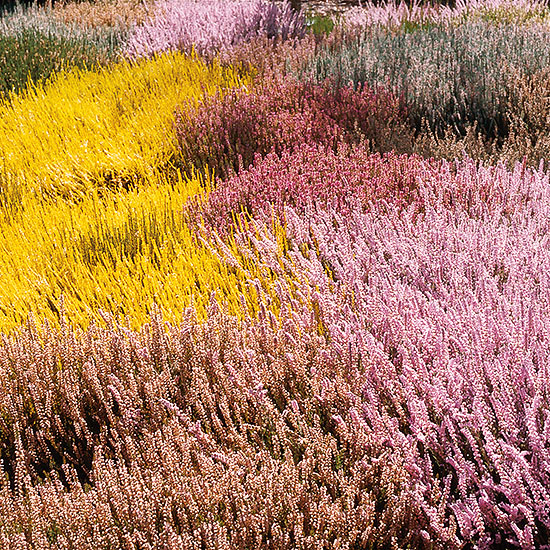
Both belong to Ericaceae but are different genera: Calluna (heathers) and Erica (heaths). They share evergreen, low‑maintenance habits and similar cultural needs. Winter hardiness is the main distinction.
Over 500 cultivars, mostly summer‑blooming (white to deep purple), foliage green to fiery orange, small scalelike leaves. Low mounds or spreading mats. Hardy Zones 5–7 (Zone 3 with protection). The classic “ling” of Scottish Highlands.
700+ species/cultivars including winter heath (E. carnea), bell heath (E. cinerea), Darley Dale (E. x darleyensis), Cornish heath (E. vagans), cross‑leaved heath (E. tetralix). Wider color range, taller forms, some small trees. Hardiness varies widely: E. carnea blooms under snow; South African types need greenhouses. Needlelike leaves vs. heather’s flat, hairy leaves. Heaths have prominent corollas; heathers’ corollas are encased by the calyx—but only a botanist spots the difference.
Foliage color shifts with cold weather (e.g., ‘Firefly’ turns brick red in winter; ‘Dawn’ goes from red to gold). Kate Herrick of Rock Spray Nursery advises focusing on plant size and spacing rather than bloom color—the hues harmonize naturally. Mass plantings on slopes create Impressionist landscapes.
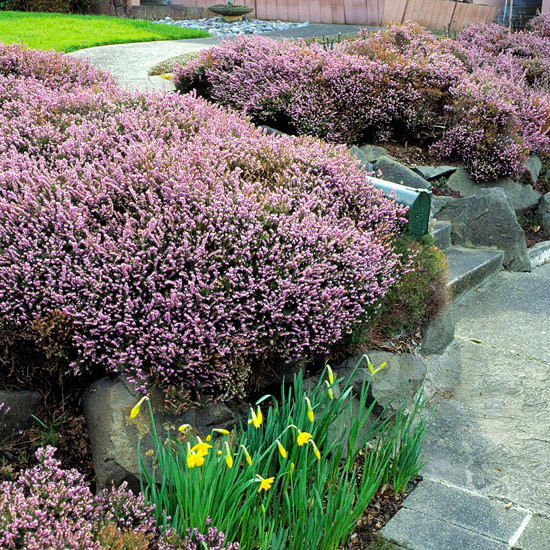
Evergreen foliage (green, yellow, bronze, red) shines in winter. Plant in open areas, hillsides, pathways. Pair with dwarf conifers (same acidic soil needs). Tolerate poor, rocky soil and salt spray—great for coastal sites. Heaths ~1′×1.5′; heathers ~2′×2–3′. Space at mature width, 2′ from other shrubs. For mass planting, multiply area by 0.44 (10×10′ = 44 plants).
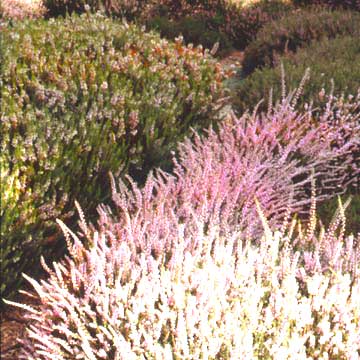
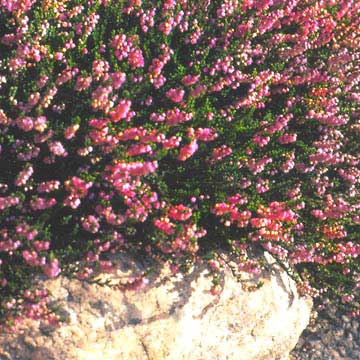
‘Alba Rigida’ – white flowers, bright green, spreading, Zone 4 hardy.
‘Firefly’ – mauve flowers, brick red foliage, upright.
‘H.E. Beale’ – silver‑pink, bronze, double flower.
‘J.H. Hamilton’ – pink, dark green, double, dwarf.
‘Mrs. Pat’ – light purple, pink‑tipped foliage, year‑round color.
‘Spring Torch’ – mauve, yellow‑orange to pink‑cream tips.
‘Tenuis’ – lilac, dark green, Zone 4, early, low.
‘Tib’ – dark pink‑purple, dark green, double, long bloom.
‘Velvet Fascination’ – white, downy silver‑gray, upright.
‘Winter Chocolate’ – lavender, gold‑pink to bronze‑yellow, compact.
E. carnea ‘Bell’s Extra Special’ – purple‑red, gold‑flecked, Zones 5–7 (3 w/ protection).
E. cinerea ‘Velvet Night’ – purple‑black, dark green, Zones 6–8.
E. x darleyensis ‘White Perfection’ – white, bright green, Zones 7–8.
E. erigena ‘Irish Dusk’ – salmon pink, gray‑green, tolerates alkaline, Zones 8–9.
E. lusitanica – pinkish white, medium green, drought‑tolerant, Zones 8–10.
E. manipuliflora ‘Korcula’ – white tinged pink, gray‑green, heat/humidity tolerant, Zones 7–9.
E. tetralix ‘Pink Glow’ – magenta, gray‑green, boggy, acidic, Zones 5–7.
E. vagans ‘Mrs. D.F. Maxwell’ – rose pink, dark green, alkaline tolerant, Zones 7–9.
E. x watsonii ‘Pink Pacific’ – pink, red with gold, Zones 5–7.
E. x williamsii ‘P.D. Williams’ – rose‑lilac, gold‑tipped green, alkaline tolerant, Zones 5–7.
Rock Spray Nursery. Heaths and Heathers Nursery.
How to Start a Vegetable Garden: A Beginner's Guide to Growing Your Own Food
Growing Ginger in Containers: From Grocery Store Root to Home Harvest
Start a Family Vegetable Garden: Planning, Planting & Harvesting Together
Herb Gardening 101: Grow Your Own Medicine, Flavor & Beauty
Growing Brussels Sprouts: The Cold-Loving Cabbage Cousin for Winter Harvests
Growing Indigo (Indigofera tinctoria): From Seed to Natural Dye
Yesterday-Today-and-Tomorrow Plant (Brunfelsia): Growing Guide & Toxicity Warning
Growing Chia Plants: A Complete Guide to Cultivation and Harvest
Nasturtium Growing Guide: Edible Flowers and Easy Care
Balsam (Impatiens balsamina) Growing Guide: Tropical Impatiens for Sun and Shade
Primrose (Primula) Growing Guide: Early Spring Color for Shade Gardens
Columbine (Aquilegia) Growing Guide: Care, Varieties, and Pollinator Benefits
Copyright © www.100flowers.win Botanic Garden All Rights Reserved