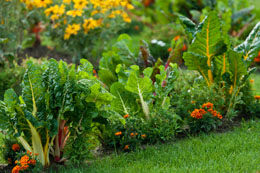
Edible landscaping—integrating food-producing plants into ornamental designs—creates landscapes that delight the senses and the palate. This "foodscaping" approach replaces purely decorative plants with dual-purpose species, yielding harvests without sacrificing beauty.
Design Philosophy: Beauty + Bounty
- Ornamental edibles: Plants with attractive form, foliage, flowers, fruit
- Design principles apply: Balance, rhythm, focal points, seasonal interest
- Right plant, right place: Sun, soil, water needs match ornamental counterparts
- Succession planning: Staggered harvests; no bare gaps after picking
Edible Plant Palette by Category
Berries & Small Fruits: Structural Shrubs
- Blueberries: Spring flowers, summer fruit, red fall foliage, red winter stems—four-season shrub
- Raspberries, blackberries on trellises—vertical element, long harvest
- Currants/gooseberries: Shade-tolerant; early summer jewels
- Elderberry: Large shrub; flowers + berries; wildlife magnet
- Serviceberry: Tree-form; edible berries; native ornamental
- Strawberries: Groundcover (alpine) or bedding (June-bearing); white flowers, red fruit
Vines & Climbers: Vertical Production
- Grapes: Pergola/arbor cover; fall color; choose table or wine varieties
- Kiwi (hardy): Vigorous vine; needs strong support; male + female
- Passionflower: Exotic flowers; edible fruit (some species); pollinator favorite
- Hops: Rapid vertical growth; ornamental cones; beer brewing
- Beans (pole): Annual; flowers + pods; nitrogen-fixing
Herbs: Texture, Fragrance, Utility
- Woody herbs: Rosemary, lavender, thyme, sage, oregano—evergreen structure
- Perennial herbs: Chives (purple flowers), mint (contain!), tarragon, sorrel
- Annual herbs: Basil, cilantro, dill, parsley—interplant for color
- Medicinal/tea: Chamomile, lemon balm, echinacea, yarrow
Vegetables as Ornamentals
- Leafy greens: Rainbow chard, red kale, purple mustard—colorful foliage
- Fruiting: Peppers (colorful), eggplant (glossy), tomatoes (trellised)
- Root crops: Carrots (feathery tops), beets (red-veined leaves)
- Alliums: Ornamental onions, garlic chives—flowers + flavor
- Edible flowers: Nasturtium, calendula, borage, pansy, squash blossoms
Fruit Trees: Specimen Scale
- Dwarf/columnar: 8-10' height; fit small spaces; espalier options
- Multi-graft: 3-5 varieties on one tree; extended harvest
- Persimmon, pawpaw, fig: Tropical look; minimal care; unique fruit
- Citrus (in pots): Move indoors in cold climates; fragrant flowers
Design Strategies
Berry & Vine Garden Room
Define a space with trellis posts and wire mesh. Plant:
- Blueberry hedge (3-4' spacing) as enclosure
- Grapes on overhead arbor
- Raspberries on fence line
- Strawberry groundcover at edges
Herb & Mushroom Specialty Beds
- Formal herb knot garden (boxwood-edged quadrants)
- Shiitake logs in shaded corner (inoculated oak logs)
- Wine cap mushrooms in woodchip paths
- Culinary herbs by kitchen door (highest use = best care)
Creepers & Bushes: Layered Food Forest
- Canopy: Dwarf fruit trees
- Understory: Currants, gooseberries, honeyberry
- Shrub layer: Blueberries, elderberry, chokeberry
- Herbaceous: Rhubarb, asparagus, perennial kale
- Groundcover: Strawberries, lingonberry, creeping thyme
- Root layer: Sunchokes, groundnuts, horseradish
- Vine layer: Grapes, kiwi, passionflower
Roots & Spices: Aromatic Beds
- Ginger, turmeric (tropical; pots in cold zones)
- Garlic, shallots, multiplier onions
- Horseradish (contain!)
- Cumin, coriander, fennel (umbel flowers = beneficial insects)
- Chili peppers (ornamental varieties)
Practical Considerations
- Soil: Test; amend with compost; most edibles want 6.0-6.8 pH
- Sun: 6-8+ hours for fruiting; 4-6 for leafy/herbs
- Water: Consistent moisture; drip irrigation ideal
- Harvest management: Plan for processing/sharing surplus
- Pest control: IPM; accept cosmetic damage; protect pollinators
- HOA/neighbors: Front yard edibles may need "ornamental" presentation
Getting Started
- Replace one ornamental shrub with a blueberry
- Add herbs to existing beds
- Plant a dwarf fruit tree instead of a flowering ornamental
- Convert a sunny bed corner to strawberries
- Install a grape arbor over patio
Edible landscaping reconnects us with the productive potential of our land. The tomato plant beside the rose, the blueberry hedge replacing privet, the grape arbor shading the patio—each choice weaves utility into beauty. Your landscape becomes a pantry, a pharmacy, a classroom, and a sanctuary all at once.


