


Desert landscaping (xeriscaping) isn't about gravel and a few cacti—it's a sophisticated approach to creating lush, colorful, ecologically rich gardens that thrive on minimal water. By embracing regional ecology, desert gardens achieve a beauty that water-dependent landscapes cannot.
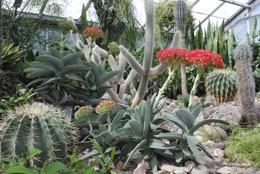
| Category | Plants | Features |
|---|---|---|
| Cacti | Saguaro, barrel, prickly pear, cholla, hedgehog | Architectural; spring flowers; wildlife |
| Succulents | Agave, yucca, aloe, sotol, beargrass | Rosettes; dramatic bloom spikes |
| Flowering shrubs | Bougainvillea, oleander, Texas sage, fairy duster, bird of paradise | Long bloom; hummingbirds |
| Perennials | Penstemon, globemallow, brittlebush, desert marigold, sage | Seasonal color; pollinators |
| Trees | Palo verde, mesquite, ironwood, desert willow, acacia | Shade; nitrogen-fixing; flowers |
| Grasses | Muhly, grama, sacaton, deergrass | Movement; seed heads; erosion control |
| Groundcovers | Lantana, trailing rosemary, verbena, ice plant | Spread; flowers; heat-tolerant |
The original article listed suitable plants: Cactus, Bougainvillea, Oleander, Red Bird of Paradise, Orange Jubilee, Mexican Petunia, Bottlebrush, Purple Sage, Fairy Duster, Ornamental Grass, Lantana. Design tips: group by water needs, contour land for water capture, drip irrigation, rock gardens, oasis/pond, mulch (wood chips, decomposed granite), low-intensity lighting.
Desert landscaping reveals a paradox: constraint creates richness. The gardener who works with aridity—rather than fighting it—discovers a palette of form, texture, and seasonal drama that humid climates can only envy. The desert garden doesn't apologize for its climate; it celebrates it.
DIY Landscaping: Design Principles and Plant Selection for Homeowners
Free Landscaping Ideas: DIY Design on a Zero Budget
Smart Pool Landscaping: Beauty, Safety & Low Maintenance
Landscaping on a Budget: Smart Strategies for a Beautiful Yard Without Breaking the Bank
Sahara Desert Plants: Survival Adaptations in Earth's Largest Hot Desert
Desert Garden Design: Create a Water-Wise Landscape for Arid Climates
Creative Home Landscaping Ideas to Boost Curb Appeal and Livability
Low-Maintenance Driveway Edge Planting for Zone 5 Canada
Front Yard Landscaping Ideas: Curb Appeal Strategies
Small Backyard Landscaping Ideas: Transform Your Compact Outdoor Space
Tropical Landscaping Ideas: Create Your Own Paradise
Backyard Landscaping on a Budget: Beautiful Outdoor Spaces for Less
Edible Landscaping Ideas: Beautiful Gardens That Feed You
Pool Landscaping Ideas: Create a Resort-Worthy Backyard Oasis
Copyright © www.100flowers.win Botanic Garden All Rights Reserved