


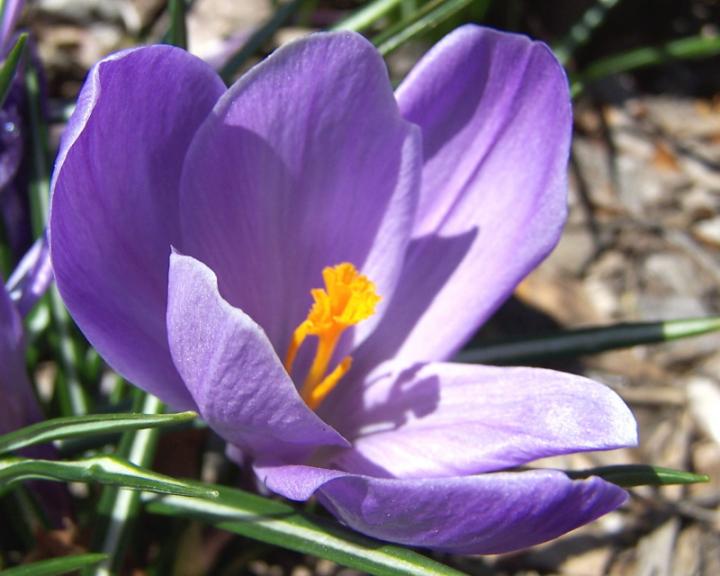
A good sign of spring: a crocus.
Annette McCarthyWhen winter seems endless, the dainty goblet-shaped crocus pushes through snow to herald colorful revival. If you're not planting these perennial bulbs, you're missing an early season of delight.
From snow crocuses (earliest to bloom) to giant Dutch crocuses, all stand just 2–4 inches tall yet offer remarkable color range—pinks, reds, oranges, yellows, purples, blues, and more—standing out against the bleak late-winter landscape. Many emit strong perfumes that lure bees from hives in February or March.
Small bulbs like crocus not only provide winter garden color but naturalize readily, spreading and returning year after year with minimal care for ever-larger displays. As a bonus, deer, squirrels, and rabbits rarely bother these early bloomers.
And all the woods are alive with the murmur and sound of Spring,
And the rose-bud breaks into pink on the climbing briar,
And the crocus-bed is a quivering moon of fire
Girdled round with the belt of an amethyst ring.
—Oscar Wilde
Send an e-card of these little blooms as a sign that warm weather is coming!
Lilies: How to Plant, Grow, and Care for True Lilies (Lilium)
Tulips: Planting Bulbs for Spring Color from Early to Late Season
Cannas: How to Plant, Grow, and Care for These Tropical Showstoppers
Delphiniums: Planting, Growing, and Care for Majestic Spikes
Irises: Planting, Growing, and Care for Rainbow Goddesses
Nasturtiums: How to Plant, Grow, and Enjoy These Edible Flowers
Sedum (Stonecrop): Planting, Growing, and Care for Succulent Perennials
Cosmos Growing Guide: Easy, Airy Blooms for Sun and Bouquets
Petunias: Growing Popular Annuals for Containers, Baskets, and Beds
Yarrow: Hardy Perennial for Borders, Rock Gardens, and Wildflower Meadows
Growing Asters: Late-Season Perennial Flowers for Color and Pollinators
Dahlias: How to Plant, Grow, and Care for These Summer Showstoppers
Copyright © www.100flowers.win Botanic Garden All Rights Reserved