


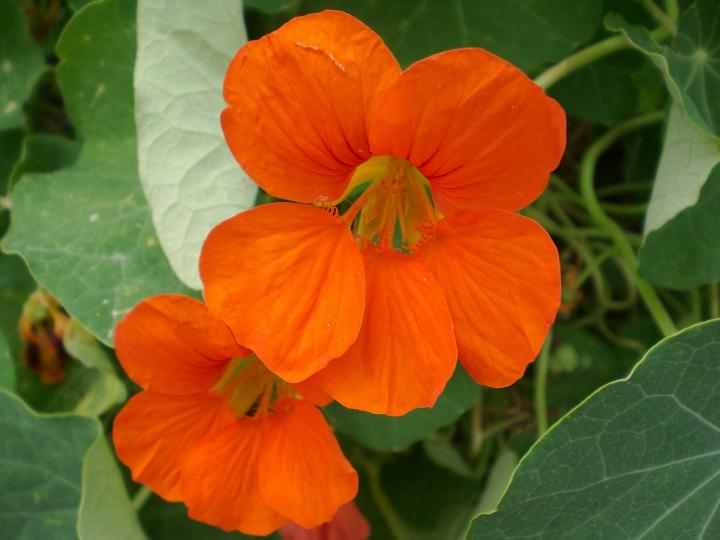
Nasturtium is an easy-to-grow annual whose leaves and flowers are edible. Bright greenery and vibrant flowers suit containers or ground covers. Their pretty fragrance makes them good cut flowers. Nasturtiums are perfect for children's gardens—they grow easily and rapidly.
Save chick-pea-sized seeds for spring replanting! Let them dry on the vine; they'll fall off. Collect, brush off soil, dry, and store in a paper envelope in a cool, dark place.
Nasturtium flowers symbolize patriotism. Discover more flower meanings.
The entire nasturtium plant is edible and makes a beautiful garnish for any summer meal.
Cosmos Growing Guide: Easy, Airy Blooms for Sun and Bouquets
Petunias: Growing Popular Annuals for Containers, Baskets, and Beds
Yarrow: Hardy Perennial for Borders, Rock Gardens, and Wildflower Meadows
Growing Asters: Late-Season Perennial Flowers for Color and Pollinators
Crocuses: Planting and Care Guide for Early Spring Blooms
Daffodils: Complete Guide to Planting, Growing, and Caring for Narcissus
Dahlias: How to Plant, Grow, and Care for These Summer Showstoppers
Hyacinths: Planting, Forcing, and Care for Fragrant Spring Blooms
Lilies: How to Plant, Grow, and Care for True Lilies (Lilium)
Marigolds: Complete Guide to Growing These Cheerful Annuals
Morning Glories: Planting and Care for Romantic Climbing Vines
Peonies: How to Plant, Grow, and Care for These Long-Lived Perennials
Sweet Peas: How to Plant, Grow, and Care for Fragrant Climbers
Tulips: How to Plant, Grow, and Care for Spring's Iconic Bulbs
Copyright © www.100flowers.win Botanic Garden All Rights Reserved