


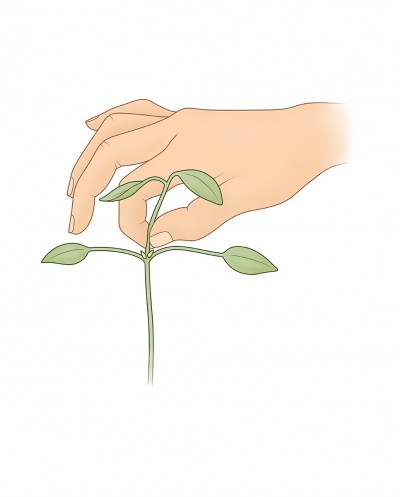
Pinching is a pruning technique that removes the growing tip of a stem, forcing the plant to branch from leaf nodes below the cut. This simple practice creates bushier, more compact plants with increased flowering or foliage production.
Pinching redirects energy from vertical growth to lateral branching. The result: fuller plants with more stems, more flowers (on flowering species), and more harvestable leaves (on herbs like basil and mint). It also controls height, preventing leggy, top-heavy growth that requires staking.
Using thumb and forefinger (or clean pruning shears), remove the tender new growth at the stem tip, cutting just above a leaf node. This is where dormant buds will activate and produce new branches. Pinch regularly during active growth for best results—start early when plants are young and continue throughout the season.
For herbs, pinch just above a leaf pair to encourage two new stems. For flowering annuals, pinch early to delay bloom but increase flower count later. Avoid pinching plants that bloom on old wood or have a single central leader (like some trees and shrubs).
Pinching Annuals and Vegetables: Rules and Timing
Carnivorous Plants for Mosquito Control in Hot Climates: Reality Check
Diagnosing Brown Tips on Peace Lily (Spathiphyllum)
Caring for a Lucky Bamboo in Rocks: Water, Light, and Fertilizer Tips
Impatiens Pinching Science: Hormone Theory and Staged Technique
5 Smart Tips for Decorating with Indoor Plants
5 Pro Vegetable Gardening Tips for Better Harvests with Less Work
Secrets to Growing Cauliflower Successfully: From Soil Prep to Harvest
When to Plant an Herb Garden: Seasonal Timing for Success
Buying Plant Nursery Supplies: Size, Materials, and Quality Guide
Essential Care Guide for Vibrant Shrimp Plants (Justicia brandegeeana)
Jade Plant Pruning: 10 Expert Tips for Shape, Strength & Propagation
Copyright © www.100flowers.win Botanic Garden All Rights Reserved