


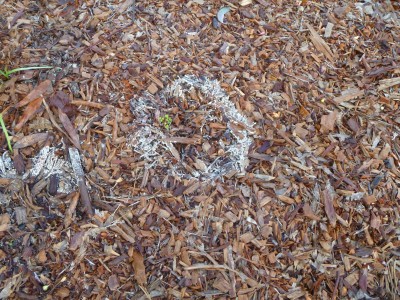
Organic mulch (bark, leaves, compost) naturally hosts fungi—they’re essential decomposers, not problems. Most mulch fungi are harmless or beneficial, improving soil fertility and water retention as they break down woody material.
Varied colors/sizes (puffballs to stinkhorns). Mostly harmless, but some toxic—remove if children/pets are curious.
Bright pink/orange/yellow patches in damp mulch. Rake to disrupt, or let it dry and hose off. Harmless.
Tiny cup-like “nests” with “eggs” (peridioles). Harmless, nontoxic, fascinating.
Tiny cups shooting sticky black spores onto light surfaces (houses, cars). Spores are tar-like and hard to remove. Not harmful to plants/people, but a nuisance. Prevention: avoid wood mulch near buildings; rake often to keep dry; use large bark chunks over shredded mulch.
No treatment needed for most mulch fungi—they’re nature’s recyclers.
Nursery-Wide Aphid and Sooty Mold Outbreak: Effective Insecticide Rotation
Datura Leaf Trails and Holes: Neem Oil for Fungus and Pests
Money Tree Mushrooms? Overwatering Is the Culprit
Bird's Nest Fungus in Mulch: Harmless but Unsightly – How to Manage It
Mulching Roses: Benefits and Common Myths
Black Spots on Siding Near Mulch? It's Artillery Fungus
Fungus in Pressure-Treated Wood: Structural Decay, Not Surface Growth
Carpenter Ants and Decay in a Mature Oak: What to Do
Overwintering Container Carnivorous Plants: Mulch Depth, Burlap, and Fungicide
Treating Fungal Growth on Cephalotus: Repotting and Fungicide Application
Treating Cottony Mold on Indoor Basil Plants
Lily Bulb Rot from Overwatering and Repotting
Effective Solutions for Fungus Gnats on Indoor Ficus Trees
Strange Mulch Fungus: Ping-Pong Ball Root, Pink Stem, Black Goo
Copyright © www.100flowers.win Botanic Garden All Rights Reserved