


Surprise! That woodpecker on the ground is likely a northern flicker (Colaptes auratus) — the woodpecker that spends most of its time foraging on lawns and open ground. As it flies, a bright white rump patch and flash of color under the wings (deep red in the West, vibrant yellow in the East/North) confirm the ID.


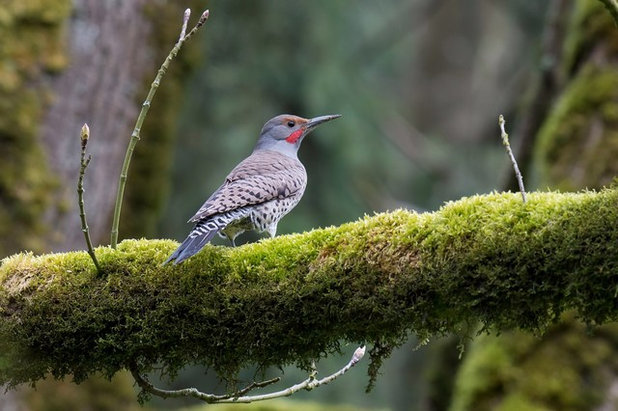
Medium-large (~12 inches), heavy slightly down-curved bill. Copper-brown barred back, brown-spotted white underparts, black crescent bib. Yellow-shafted: yellow underwings/tail, gray crown, tan face, red nape crescent. Red-shafted: red underwings/tail, brown crown, gray face. Both have large white rump patch. Males have a distinct malar stripe (mustache): black (yellow-shafted) or red (red-shafted). Females have a faint sooty/tan stripe.


They eat native berries, seeds, and especially ants/beetles/invertebrates. Create diverse plant heights with native species: low groundcovers (wild strawberry, clover, native grasses) → small shrubs (dogwood, elderberry, native blueberry) → fruit-bearing trees for winter. Leave fallen limbs to decompose for a "bug buffet."


Critical! Flickers rely heavily on ants/ant larvae, often foraging on lawns. Pesticides and synthetic fertilizers destroy their food source and deter them.

Cavity nesters in dead trees/large branches (often reuse old cavities). Prefer trees with heart rot (quaking aspen, etc.). Male excavates; 5–8 eggs in mid-May; chicks fledge ~1 month later. Install a nest box (Cornell Lab has plans) in the right habitat to invite a family.


In Sonoran Desert saguaro forests, the gilded flicker (C. chrysoides) blends traits of both forms (gray face, red malar, yellow underwings). Larger black bib, finer back barring, cinnamon crown. Nests in saguaro cavities. Separate species since 1995.
YardMap (Cornell Lab) connects thousands documenting backyard bird habitat.
Backyard Gardening: America's Favorite Pastime
Exotic Flowers: Stunning Varieties for Home and Garden
Rodent Control Done Right: Why Green Professional Service Beats DIY
Expert Faridabad Pest Control: Healthy Environments Through Professional Service
Green Cleaning: Safe, Effective, and Eco-Friendly
Choosing the Perfect Backyard Landscape: Design, Function & Flow
Thriving Houseplants in North-Facing Windows: Blooming Beauty Without Direct Sun
Backyard Renovation for Kids and Dogs: Till in Crabgrass, Lay Sod, and Go Organic
Coolest Annual Varieties for Home Gardens
Home Energy Saving Solutions: Windows, Doors, and Insulation
Late‑Summer Tick Check: Protect Your Family and Pets
Mycotoxins and Mold: Why Professional Inspection and Removal Matter
Feeding Backyard Birds: Create a Bird-Friendly Garden Habitat
Spring Garden Tour: Five Palo Alto Landscapes Designed for Living
Copyright © www.100flowers.win Botanic Garden All Rights Reserved