


Transforming a simple garden gourd into a charming birdhouse or feeder is one of the most rewarding projects for nature lovers. With just a seed, some patience, and basic tools, you can create custom avian housing that attracts specific bird species based on the entrance hole size you drill.
Gourds grow on vigorous vines similar to pumpkins or cucumbers, requiring ample space. To manage their sprawling habit, train vines up a trellis or fence. After the last frost, sow seeds in small hills spaced about 8 feet apart in full sun. Plant three to five seeds per hill, ¾ inch deep, and water consistently. Once seedlings emerge, thin to the strongest plant. When the main vine reaches 8–10 feet, pinch off the tip to encourage lateral branching and more fruit production.
Wait until the gourd's stem withers and dries — a clear sign of maturity. Harvesting too early leads to shriveling and rot. Place gourds in a dry, airy location; surface mold is normal and can be wiped off occasionally. After 3–9 months, the gourd will feel light and seeds will rattle inside, indicating it's fully cured. To clean, wrap in a wet towel for two days, then scrub off the outer skin and mold with steel wool or a dull knife. Allow to dry completely before crafting.
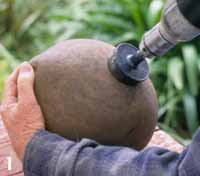 Use a craft knife, razor knife, or hole-saw attachment to create openings. A single hole makes a birdhouse; four holes create a feeder. Hole diameter determines which species can enter — 1⅛ inches for chickadees, 1½ inches for bluebirds, larger for woodpeckers.
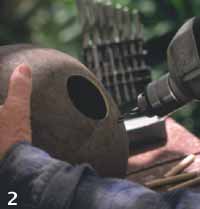 Drill a hole the diameter of a wooden dowel or peg beneath each entry hole. These perches give birds a place to land and feed comfortably.
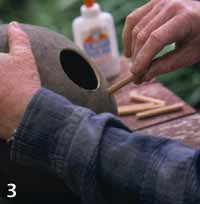 Apply waterproof glue to the perch holes and insert pegs. Add extra glue where perches contact the interior wall for stability. For hanging, install a small eye hook at the top or drill a tiny hole for wire. Your handmade gourd feeder is now ready to welcome feathered visitors!
Merit 75WP Safety on Fruit Trees and Borer Treatment Follow-Up
Wasps and Yellow Jackets Entering Homes: Nest Location and Treatment
Using Gray Water (Dishwater) for Plants During Drought
Best Low-Light Houseplants for Busy Homeowners
Sinkhole or Settling? Hole in Connecticut Yard Near River Demands Expert Evaluation
House Plant Pots & Containers: Choosing the Right Home for Your Plants
Creating a Backyard Bird Sanctuary: Feed, Shelter, and Water Essentials
Animal Digging Under Slab Foundation in Dallas/Fort Worth
Sparrow Pecking Stucco: Exclusion and Legal Control
Complex Drainage Solution for L-Shaped Pool House Yard
River Birch 5 ft from House: Roots Safe, Prune Limbs
Tree Roots & House Foundations: Poplars, Clay & Moisture Depletion
Copyright © www.100flowers.win Botanic Garden All Rights Reserved