


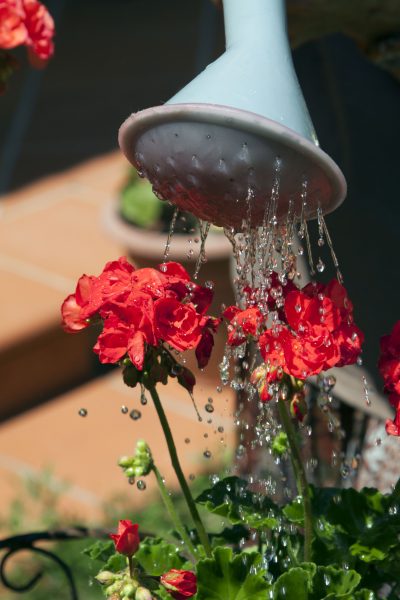
Figuring out the right amount of water for potted plants can feel like walking a tightrope—too little leads to drought stress, too much causes root rot. Summer heat makes this balancing act even trickier. Fortunately, a few simple guidelines and tools can take the guesswork out of container watering.
Containers dry out faster than in-ground beds because their soil volume is limited. The best times to water are early morning or early evening. This gives plants a chance to absorb moisture before the day's heat peaks, while allowing foliage to dry quickly, reducing fungal risk.
Don't wait until the soil is bone-dry at the bottom—that may already be too late. Watch for warning signs: shriveled leaves, limp stems, dropping petals, or dry, discolored foliage. In warm, dry weather, check pots daily. A good rule of thumb: when the top inch of soil feels dry, it's time to water. During summer, especially when temperatures exceed 85°F (29°C), most outdoor potted plants need daily watering, sometimes twice a day.
Frequency depends on the plant species. Succulents and drought-tolerant varieties need less frequent watering than annuals or vegetables. Established plants can go longer between drinks than newly planted ones. The key is consistent monitoring.
Water deeply and slowly. A gentle, thorough soak allows moisture to reach all parts of the root zone and encourages the soil to absorb water fully. Light, quick watering often just runs out the drainage holes before the roots benefit. If potting mix has completely dried out, it may repel water; in that case, submerge the whole container in a tub of water for about 30 minutes to rehydrate the soil. For hanging baskets or moss-lined wire cages, dunking the entire container in a bucket works best.
A moisture gauge is an inexpensive, invaluable tool. Its probe reads soil moisture levels, helping you match watering to your plant's specific needs. If your plant prefers moderately moist soil and the gauge shows dry, water until moisture leaches from the drainage holes, then let the top few inches dry before the next watering. Over time, you'll learn each plant's preferences through observation.
Outdoor pots lose moisture faster due to sun, wind, and higher temperatures. Make watering easier with these strategies:
Systemic Insecticide for Mealybugs: Dosage, Safety & Alternatives
Does Water Temperature Affect Houseplant Growth?
Self‑Watering Solutions for Indoor and Outdoor Containers
How to Design and Plant a Container Herb Garden
Container Gardening Mastery: Sizing, Soil, and Plant Compatibility
How to Make a Container Water Garden: Simple, Affordable, Beautiful
Watering Your New Orchid: The Bottom-Up Method for Phalaenopsis Success
Rubber Plant Watering by Weight: The Professional Method
Perfecting Your Dracaena Watering Routine: The Skewer Test and Water Quality
Diagnosing Leaf Drop on Ficus and Schefflera
New and Improved Garden Watering Solutions for Berkshire
The Basics of Planting Container Gardens: Step-by-Step Success
How to Water Anthuriums: Replicating Rainforest Conditions at Home
Copyright © www.100flowers.win Botanic Garden All Rights Reserved