


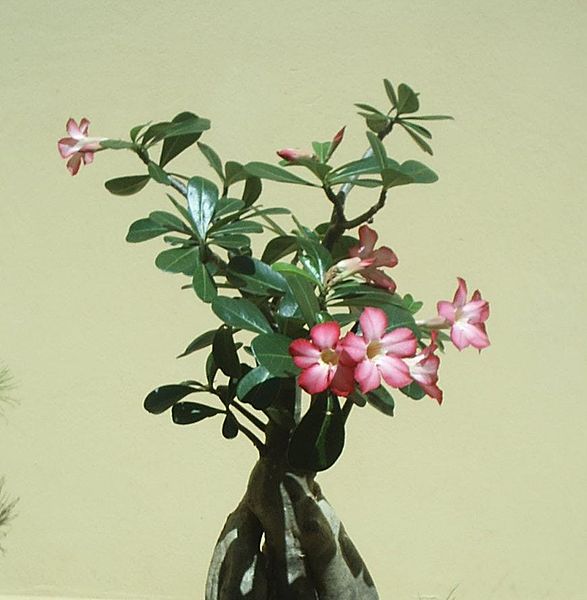
Native to arid regions of Arabia and Africa, desert rose (Adenium obesum) is a caudiciform (“fat plant”) prized for its grotesquely swollen, water-storing trunk (caudex) and spectacular 1–2 inch saucer-shaped flowers in red, pink, or white. Sparse, small leaves appear only on new growth. Indoors it reaches 2–5 feet tall and 1–3 feet wide.
Provide maximum light (south window), a fast-draining cactus mix, and water only when the soil is bone-dry. The caudex should sit partly above soil level to prevent rot. It’s nearly impossible to kill if not overwatered. Dormant in cool, dark winters—reduce water to a bare minimum.
The sap contains cardiac glycosides; highly toxic if ingested. Keep far from children and pets; wear gloves when handling.
Rose Bush Powdery Mildew: Atomic Grow for Bloom Explosion
Spider Mites on Indoor Rose: Systemic Treatment for Long-Term Control
Stunted, Mutant-Looking Rose: Likely Virus—Remove and Replace
When to Plant a Rose Bush in Buffalo, NY
Seven-Leaflet Canes on Roses: Suckers or Variety Trait?
Identifying and Treating Rose Slug Damage on Container-Grown Knock Out Roses
Rose of Sharon Winter Care: Not a True Rose, But Still Needs Protection
"Texas Rose" Houseplant: Not a Rose at All—Here's What It Likely Is
Dewy Pine (Drosophyllum lusitanicum): The Carnivorous Plant for Dry Climates
Desert Rose (Adenium) Root Rot: Surgery and Water-by-Weight
Desert Rose (Adenium): Black Spots – Healed or Active?
Propagating Adenium obesum (Desert Rose) from Stem Cuttings
Copyright © www.100flowers.win Botanic Garden All Rights Reserved