


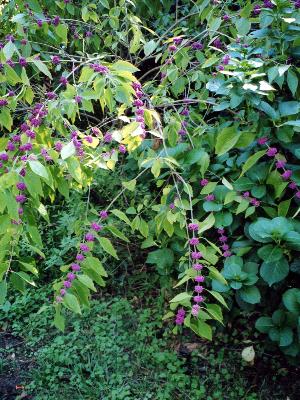
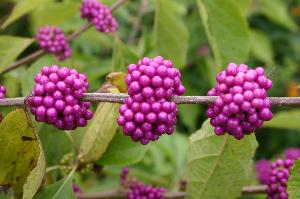
If you've spotted a shrub loaded with vibrant purple berries in late summer or fall, chances are you're looking at American beautyberry (Callicarpa americana). This native deciduous shrub is a standout for autumn color, and it's commonly found along woodland edges and stream banks throughout the Southeast.
Both native and Asian species exist, but the key difference lies in how the berries are arranged. On American beautyberry, the fruits cluster tightly around the leaf nodes along the arching branches. Non-native beautyberries, by contrast, hold their berries on short stalks (petioles) away from the main stem, and the berries themselves are usually smaller and more bluish in tone.
Beautyberry shrubs can reach 5 feet tall and 6 feet wide, with gracefully arching branches. The berries appear in late summer and persist well into winter, providing exceptional fall and winter color. However, don't expect them to last until spring—birds relish the fruit and will typically strip the plant clean by late winter.
Smilax Berries: Bird Food That Spreads a Thorny, Invasive Vine
Finding Wild Elderberries: Join a Native Plant Rescue
North American Millipede: Harmless but Startlingly Large
Butterfly Identification Resources for Southeast Gardeners
Are Beautyberries Poisonous? What Gardeners and Parents Should Know
Golden Larch vs. Common Larch: Clearing Up the Confusion
Society Garlic: Seed Collection and Deer Resistance
Lanceleaf Greenbriar: Thornless Vine with Edible Shoots
Barred Owl: The "Who Cooks for You?" Hunter
Bloody Dock (Rumex sanguineus): Ornamental or Invasive?
Creasy Greens: The Spring Tonic Wild Cress
Turtlehead (Chelone lyonii): Native Perennial for Damp Shade
Copyright © www.100flowers.win Botanic Garden All Rights Reserved