


Japanese beetles swarming ripening peaches are a classic Georgia frustration. Synthetic insecticides like carbaryl (Sevin) or bifenthrin provide reliable knockdown. Organic options—neem oil as an anti-feedant, kaolin clay (Surround) as a deterrent—offer limited relief. Hand-picking at dawn when beetles are sluggish works for a tree or two, but is impractical for larger infestations.
Beetle traps attract more beetles than they catch. Milky spore and parasitic nematodes require area-wide treatment (100-yard radius) to be effective—costly and unrealistic in suburban settings. For many, buying peaches from a local farmer is the sanest choice.
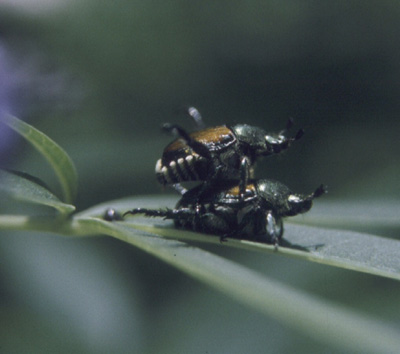
Japanese Beetle Control on Purple Sand Cherry
Small Black Beetles on Ornamental Cherry: Organic Options Spinosad or Neem
Japanese Beetles: Identification, Damage, and Control Strategies
Flea Beetle Damage on Eggplant: Organic and Synthetic Controls
Community-Wide Milky Spore for Japanese Beetles: Questions to Ask First
Why Are My Japanese Beetles So Large? Identifying Look-Alikes
Japanese Beetle Devastation on Plum Tree: Systemic Protection
Japanese Beetle Control on Purple Plum Trees
Stop Japanese Beetles: Effective Control Methods
Pine Beetle Pitch Tubes: Identify the Borer
Powder Post Beetles in Furniture: Identification and Control
Pine Beetles: Remove Infested Trunks, But Chips Are Safe for Mulch
Copyright © www.100flowers.win Botanic Garden All Rights Reserved