


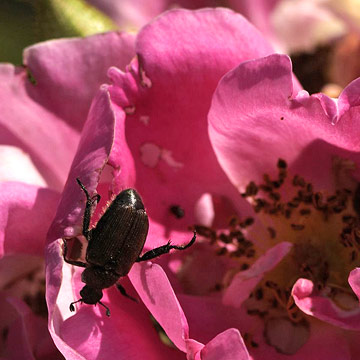
For light infestations, the safest, cheapest method: pick beetles off plants by hand and drop into a bucket of soapy water.
Available pesticides: look for carbaryl, acephate, permethrin. Organic neem-based pesticides and insecticidal soaps also work. Note: insecticidal soaps kill on contact but offer no residual protection.
Learn about 10 common garden pests and how to treat them.
Adult beetles cause visible damage, but their larvae (grubs) harm lawns. Treating grubs kills most before they emerge as adults. Effective grub-killing products exist, including organic beneficial nematodes.
Learn more about stopping grubs.
Beetles release pheromones attracting others. Eliminate early arrivals before they invite more.
Learn more of the best ways to get rid of bugs.
University research shows traps worsen problems. They use pheromones to attract beetles, bringing more into your yard than they catch.
Beetles are most active above 85°F in still air. Be especially watchful during these conditions.
Japanese beetles eat hundreds of plants but tend to avoid:
See the secrets to eliminating other types of garden pests.
Flowering Plum Defoliation: Japanese Beetle Feeding
Plum Tree Leaf Damage: Japanese Beetles and Control Options
Japanese Red Maple and Japanese Beetles: Manageable Risk
Natural Japanese Beetle Control: Hand-Picking, Companion Planting, and Homemade Sprays
How to Control Cucumber Beetles on Cucurbits
Japanese Beetle Decline Linked to Dry Summer
Organic Japanese Beetle Control: Soap, Pyrethrin, and Realistic Expectations
Managing Japanese Beetles and Spider Mites Organically
Milky Spore for Japanese Beetles: Timing, Application, and Community Impact
Japanese Maple Defoliated by Beetles: Wait, Don't Prune
Chemical Control for Japanese Beetles: When Hand-Picking Isn't Enough
Why Japanese Beetles Disappeared After Drought
Copyright © www.100flowers.win Botanic Garden All Rights Reserved