


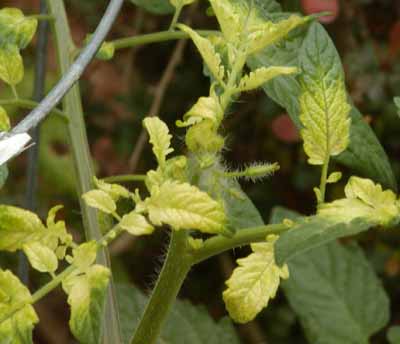
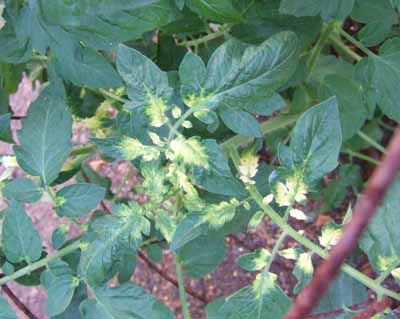
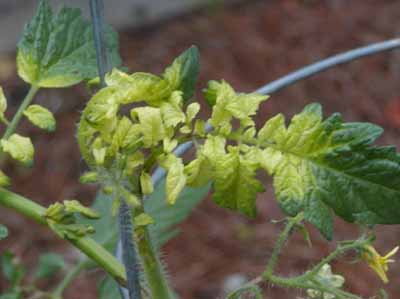
Frequent liming to prevent blossom-end rot can raise soil pH so high that tomato plants cannot absorb iron, causing yellowing (chlorosis) on new growth, leaf curling, and stunting. The symptoms appear on multiple varieties from different sources, confirming a soil issue, not a disease.
Test the soil through your local Extension office (georgiasoiltest.com) and follow the recommendations. A teaspoon of lime per plant per year is sufficient for calcium; more disrupts nutrient uptake. Correcting pH restores iron availability and plant health.
Starting an Organic Vegetable Garden from a Weedy Lawn in Northeast PA
Apple Tree Propagation: Cuttings Preferred Over Seeds for 30-Year-Old Tree
Overwintering Calla Lilies: Digging, Curing, Storing, and Spring Replanting Guide
Diagnosing Yellowing Tomato Plants and Potato Leaf Dieback
Solving Yellow Tomato Leaves in Florida: Whiteflies, pH, and Sanitation
Troubleshooting New Sod Decline: Watering, Rooting, and Disease
Growing Better Tomatoes: Soil Prep, pH, and Raised Beds
Diagnosing Tomato Stem Disorders and Fusarium Wilt
Diagnosing Brown Leaves on Tomato Plants: Overwatering vs Sunscald
Yellowing Tomato Seedlings: Drainage and Fertilizer Issues
Tomato Garden Care: Watering, Staking & Early Season Protection
Copyright © www.100flowers.win Botanic Garden All Rights Reserved