


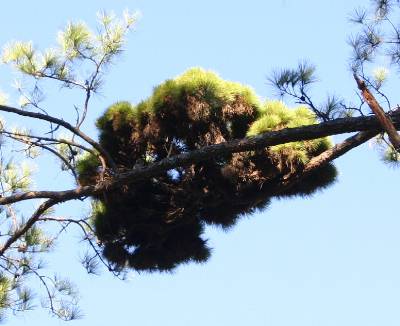
A dense, bushy cluster of needles at a pine branch tip—called a witch's broom or pine brooming—is caused by fusiform rust, a common fungal disease on loblolly pines.
The fungus typically creates swollen galls on stems. When it invades a growing tip, it triggers a hormonal explosion: the tip produces vigorous, short shoots in all directions, each covered in needles. The result is a conspicuously dense, green "broom."
Brooms can persist for decades. One neighbor's broom survived 22 years, its heavy photosynthesis actually strengthening the supporting limb. Eventually, accumulated needle weight plus a storm caused the branch to fall.
The dwarf loblolly pine cultivar 'Nana' originated from a propagated witch's broom.
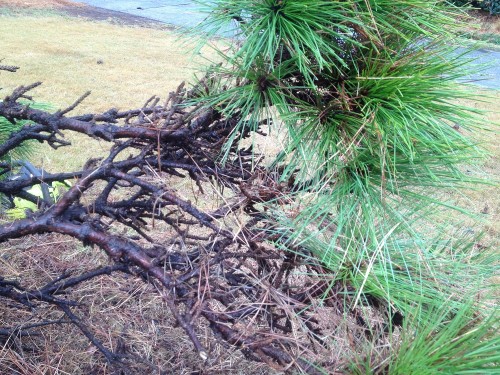
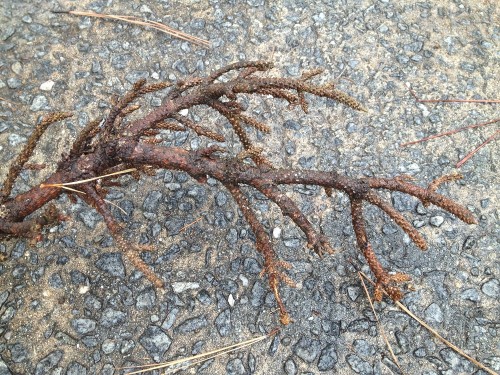
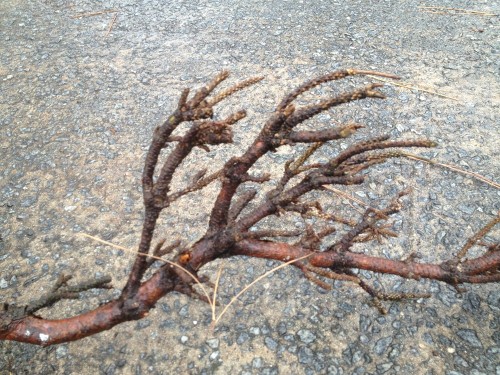
No treatment needed unless the broom becomes a hazard. Prune it out if it threatens to break; otherwise, enjoy this quirky natural sculpture.
Cooking Potatoes in Pine Rosin: A Unique Southern Tradition
Pine Seedling Surge: Mast Year Aftermath
Evergreen Shade Trees for Middle Georgia: Pine is the Main Option
Raking Pine Straw Over Pre-Emergent: No Problem
Red Pine (Pinus resinosa) Only for North Georgia Mountains
Pine Bark Nuggets and Termites: Minimal Risk
Red-Headed Pine Sawfly Larvae on Deodar Cedar: Act Fast to Save Your Tree
Why Some Pine Trees Have Cones and Others Don't
Pine Beetle Pitch Tubes: Identify the Borer
Broom Corn (Sorghum) Volunteers from Bird Seed
Using Pine Cones to Deter Deer: A Simple, Natural Solution
Mugo Pine Overgrown: Prune to Interior Needles or Replace
Copyright © www.100flowers.win Botanic Garden All Rights Reserved