


That aggressive plant taking over your yard? It's Japanese knotweed (Polygonum cuspidatum, also called Mexican bamboo). It's on virtually every invasive species list in North America for good reason: it spreads rapidly via rhizomes, forms dense thickets, and chokes out native vegetation. The wispy white flowers in fall are attractive, but don't let that fool you.
Digging works for small patches, but any rhizome fragment left behind resprouts. For established stands, use the "cut-and-daub" method in late summer: cut stems near the ground, then immediately apply undiluted glyphosate (Roundup, Kleenup) to the fresh cuts. For even better absorption, peel back a few strips of bark near the base with a kitchen peeler before applying herbicide—this exposes vascular tissue for faster uptake.
Persistence is key. Monitor for regrowth and retreat as needed. Bag and dispose of all plant material; never compost it.
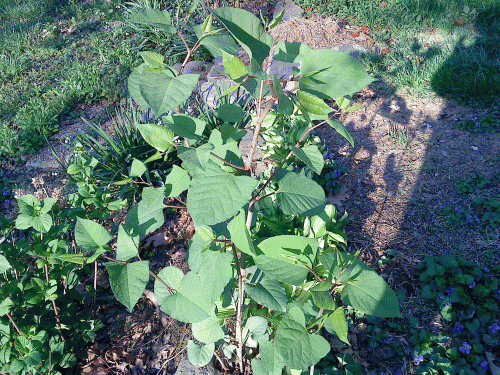
Polygonum cuspidatum
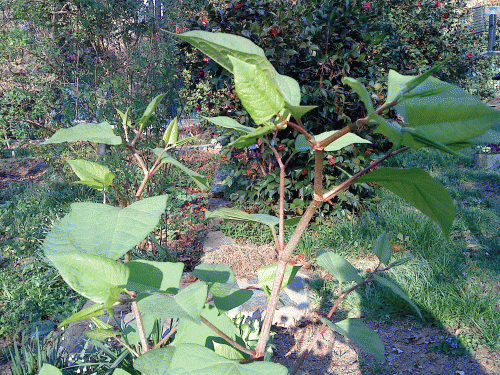
Polygonum cuspidatum
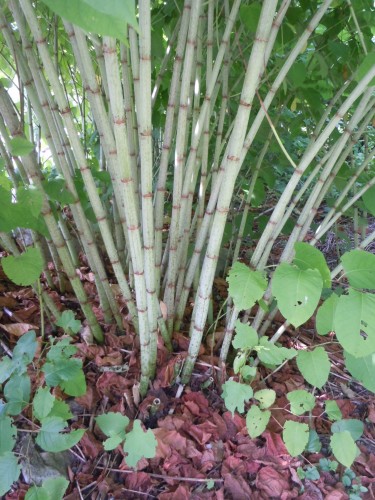
Polygonum cuspidatum
Polygonum cuspidatum
Japanese Knotweed: Legal Status, Risks & Responsible Management
Japanese Knotweed: Legal Responsibilities and Control Strategies
Japanese Knotweed Control: Effective Eradication Methods
Japanese Knotweed Waste Management: Transport and Disposal Compliance
Japanese Knotweed: Why Fast, Professional Removal Is Critical
Japanese Knotweed in the UK: Persistent Spread Demands Ongoing Control
Eating Japanese Knotweed: Nutrition, Flavor & Recipes for an Invasive Edible
Japanese Knotweed Invasion: Identification, Control, and Legal Obligations
The High Cost of Japanese Knotweed: Damage, Law & Eradication
UK Code of Practice for Japanese Knotweed Control and Eradication
How to Grow Japanese Knotweed (Japanese Bamboo) as an Ornamental
Copyright © www.100flowers.win Botanic Garden All Rights Reserved