


The Cherokee rose (Rosa laevigata) holds a unique place in Georgia's history—designated as the state flower in 1916, yet not native to the region. Its story intertwines botanical introduction, commercial horticulture, and a powerful legend born from tragedy.
Native to China, the Cherokee rose was introduced to the American South by nurseryman Thomas Affleck in the mid-1800s. He marketed it extensively as a hedge plant for plantations and homesteads. The rose naturalized readily across the Southeast, thriving in the climate.
A poignant legend connects the rose to the forced removal of Cherokee people in 1838. As the story goes, where each tear fell along the thousand-mile march to Oklahoma, a Cherokee rose sprang up. While botanically inaccurate—the rose was already established—the legend honors the memory of over 4,000 Cherokee who perished.
The Cherokee rose is often confused with Macartney rose (Rosa bracteata), which blooms in summer and exhibits aggressive, invasive growth. Cherokee rose blooms in spring and, while vigorous, is less rampant.
In 1979, the Georgia legislature designated the native azalea as the state wildflower, while retaining the Cherokee rose as the state flower—acknowledging both the adopted cultural symbol and the true native treasure.
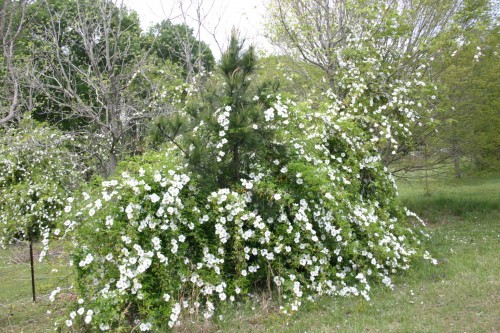
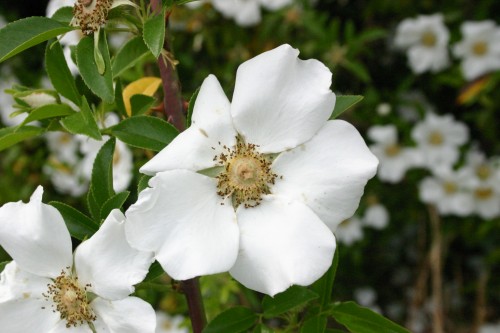
Cherokee rose flowers—large, white, and fragrant
Vigorous climbing habit on a garden structure
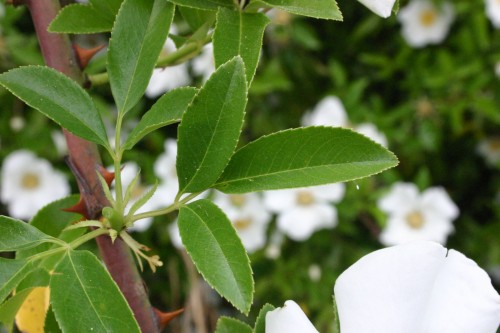
Glossy evergreen foliage provides year-round interest
Finding a Replacement for Terosa Organic Rose Fertilizer
Starting Rose Seeds: Warmth, Not Fridge, for Germination
Diagnosing Abnormal Rose Leaves: Light Green, Narrow, Shriveled Clusters
Pink Knockout: Spidery Leaves, Weak Blooms = Possible Rose Rosette Disease
Rooting a Florist Rose Cutting – Low Success Rate
Mystery Rose Beside John Austin: It's the Rootstock (Dr. Huey) Making a Comeback
Rose Rust in July: Not Just Spring Disease Anymore
Keeping a Sentimental Rose in a Pot Long-Term: Zone 7 Strategy
Mystery Transplant: Rose or Imposter? Thorny Growth Without Blooms in Boston
Harvesting Rose Hips: Timing, Processing, and Best Varieties
Climbing Rose Won't Bloom After 5 Years: Sun, Variety, and the "Dud" Factor
Rose Buds Turning Black: Midge Damage or Heat Stress
Organic Rose Chafer Control in Sandy Soils: Barriers, Biologicals, and Timing Strategies
Copyright © www.100flowers.win Botanic Garden All Rights Reserved