


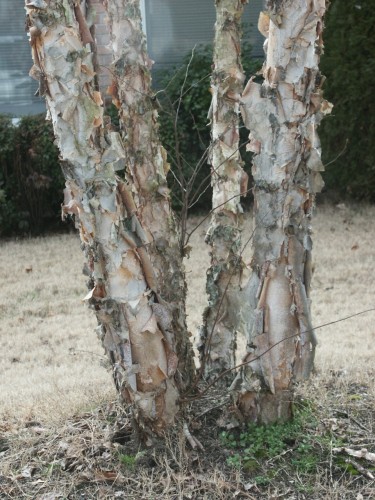
Multi-trunk 'Heritage' river birches often develop depressions where trunks meet, collecting rainwater. While it may look concerning, these pockets rarely cause rot or harm the tree. The bark in these areas is adapted to periodic moisture.
If water stands for several days in summer, mosquitoes may breed. Simply drop a Bacillus thuringiensis israelensis (Bti) mosquito dunk (available at nurseries) into the water. It's safe for wildlife and lasts 30 days.
Never drill a drain hole. This creates an entry point for decay fungi, insects, and disease, causing far more damage than the standing water ever would.
Leave the tree alone. River birches are adapted to wet conditions—their natural habitat includes floodplains and stream banks. A little pooled water is business as usual.
Velvet Galls on River Birch: Mite Damage, No Treatment Needed
River Birch Leaking After Pruning: What to Do
Large Transplanted Maples and Birches: Water, Wait, Don't Fertilize Yet
River Birch Near Driveway/Foundation: Use Dwarf Cultivar
Watering Young's Weeping Birch (Youngii) Correctly
Water-Holding Tree Crotch: Don't Drill Drain Holes
Sourwood Establishment: Walter's Rule of Trunk Caliper Years
River Birch Aphids: Minor Pest, Easy Systemic Control
River Birch Near a Pool: Root Concerns & Construction Tips
River Birch Defoliated by Caterpillars: Identify, Spray Now, Prevent Next Year
Assessing Survival of a Newly Planted Heritage River Birch
Leaning River Birch: Why Topping Is a Terrible Idea
Copyright © www.100flowers.win Botanic Garden All Rights Reserved