


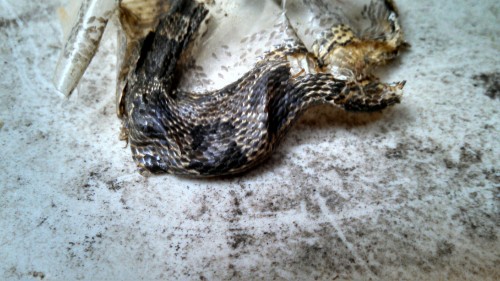
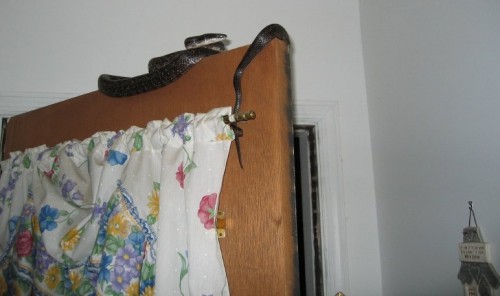
Discovering a snakeskin on a box in your garage can be startling, but it's actually a sign of a beneficial visitor. The skin likely belongs to a gray rat snake (Pantherophis spiloides), a common, non-venomous climber that helps control rodent populations.
Snakes shed their skin (ecdysis) as they grow, leaving the old "clothes" behind. This process takes a few hours to a day, during which the snake seeks a rough surface to rub against. Your garage—quiet, dark, and occasionally visited—provided a convenient spot. However, snakes are extremely sensitive to vibrations from footsteps, voices, and doors. Your normal comings and goings would have encouraged the snake to leave immediately after shedding.
Gray rat snakes are adept climbers, often found in rafters, attics, and trees hunting mice, rats, and bird eggs. They pose no threat to humans or pets. In fact, their presence indicates a healthy ecosystem and free pest control. If you want to discourage future visits, seal gaps around doors, vents, and pipes, and keep garage clutter to a minimum.
Remain calm. Most snakes will flee if given space. Gently herd it toward an open door with a broom, or call a local wildlife removal service if you're uncomfortable. Never attempt to kill or handle a snake—most bites occur during such attempts.
Snake Skin Bamboo 'Bory' (Phyllostachys nigra 'Bory'): A Running Bamboo with Leopard-Spotted Culms
Canna Lily Dermatitis: Mystery Reaction, Not Leaf Rollers
Pruning Okra for Easier Harvesting
Gray Rat Snake on Hummingbird Feeder: Harmless but Hungry
Copperhead Snake Identification: Venomous—Observe, Don't Touch
Snake Identification: Black Rat Snake on Your Deck
Snake Skins in the Attic: What to Do
Stinging Nettle in Bermuda: Rare Lawn Weed, Spot-Spray Broadleaf Herbicide in Spring
Land Planaria (Hammerhead Worm): Earthworm Predator
Snake Deterrents That Don't Work: Lime, Mothballs, and Real Solutions
Pipsissewa (Chimaphila maculata): Striped Wintergreen of the Forest Floor
Copyright © www.100flowers.win Botanic Garden All Rights Reserved