


| Family: | Pinaceae (py-NAY-see-ee) (Info) |
| Genus: | Abies (A-bees) (Info) |
| Species: | concolor (KON-kol-or) (Info) |
| Synonym: | Abies concolor var. lowiana |
| Synonym: | Abies concolor subsp. lowiana |
| Synonym: | Abies lowiana |
| Synonym: | Picea concolor |
| Synonym: | Pinus concolor |
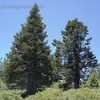
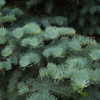
The Concolor Fir, or White Fir (Abies concolor), is a magnificent, large conifer native to the mountains of the western United States (Rockies to Sierra Nevada). It is celebrated for its **soft, long, blue-green to silvery needles** that curve upward, giving the tree a distinctively lush, feathery texture, and a delightful citrus or tangerine fragrance when crushed—unique among firs.
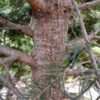
Needles are 1.5–2.5 inches long, flattened, blunt-tipped, and uniformly colored on both sides (hence concolor), ranging from powdery blue-green to intense silvery-blue depending on seed source. They are arranged in two ranks but curve upward, cloaking the twigs. Cones are 3–5 inches long, held upright on upper branches, maturing from green to purplish-brown, then disintegrating to release seeds. Bark on young trees is smooth, gray, with resin blisters; on mature trees, it becomes thick, deeply furrowed, and reddish-brown.
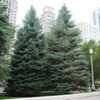
In cultivation, it typically reaches 30–50 feet tall (up to 130+ ft in the wild) with a symmetrical, pyramidal to conical crown and a strong central leader. It is slower-growing than many pines but faster than most firs. The cultivar 'Compacta' and 'Violacea' (intense blue) are popular for smaller spaces.
Hardy in USDA Zones 3–7, Concolor Fir prefers full sun to light shade and moist, well-drained, slightly acidic soil. **It is notably more heat-, drought-, and alkaline-tolerant than most firs**, making it a superior choice for Midwestern and Plains landscapes where other firs struggle. It is relatively pest-resistant (less prone to adelgids). Its superb foliage color, fragrance, formal shape, and adaptability make it a premier specimen, screen, or Christmas tree crop. A conifer of distinction for cold climates.
Salvia apiana: White Sage, Sacred Ceremonial Plant
Silver Torch Cactus (Cleistocactus strausii): A Columnar, White-Fuzzy Cactus
Yellow Tabebuia (Tabebuia aurea): Silver-Leaved Trumpet Tree of Gold
Silver Birch (Betula pendula): The Graceful European White Birch
Silver Cloak Fern (Cheilanthes argentea)
Moonflower (Ipomoea alba): The Enchanting Night-Blooming Vine
That "Cuculla" Fir Was a Concolor Fir—And Why It Smelled Like Tangerines
Salvia farinacea 'Silver White' (Mealy Cup Sage)
Giant Lilyturf (Ophiopogon jaburan): A Versatile Shade-Loving Groundcover
Caracas Wigandia (Wigandia urens): The Stinging Giant with Velvet Leaves
Satin Pothos (Scindapsus pictus 'Argyraeus'): The Silver-Splashed Trailing Vine
Salvia apiana: The Sacred White Sage
Copyright © www.100flowers.win Botanic Garden All Rights Reserved