


Salvia apiana, known as White Sage, Bee Sage, or Sacred White Sage, is a revered perennial subshrub native to the coastal sage scrub of Southern California and Baja California. Its silvery-white foliage and spiritual significance make it unique among salvias.
| Family: | Lamiaceae (lay-mee-AY-see-ee) |
| Genus: | Salvia (SAL-vee-uh) |
| Species: | apiana (a-PEE-an-uh) |
| Synonyms: | Audibertia polystachya, Audibertiella polystachya, Ramona polystachya |
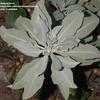
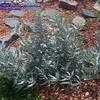
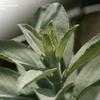
This woody-based perennial grows 3-5 feet tall and wide with stems and leaves densely covered in white, woolly hairs—giving the entire plant a luminous silvery-white appearance. The leaves are lanceolate, 2-4 inches long, intensely aromatic when crushed (a sweet, resinous, slightly acrid scent). In spring to summer, tall spikes bear small, white to pale lavender flowers in whorls.
White Sage demands full sun, excellent drainage (sandy, rocky, alkaline soil), and minimal water—it's adapted to Mediterranean climates with winter rain and summer drought. It resents humidity and summer irrigation. Hardy in zones 8-11. Overwatering is the primary cause of failure.
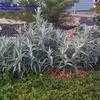
Sacred to Native American peoples (Chumash, Tongva, etc.) for smudging ceremonies, purification, and medicine. The dried leaves are bundled as "smudge sticks." Ecologically, it's a keystone species for native bees (hence "Bee Sage") and a host for checkerspot butterflies. In gardens, it's a stunning silver accent for xeriscapes and native plantings. Harvest sustainably—wild populations are threatened.
Copyright © www.100flowers.win Botanic Garden All Rights Reserved