


Shagbark hickory is a large, long-lived deciduous tree native to eastern North America, famous for its distinctive bark that peels in long, vertical strips, giving the trunk a shaggy appearance. It produces edible nuts prized by wildlife and humans, and its wood is among the hardest and strongest of native hardwoods.
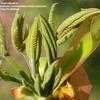
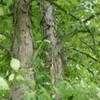
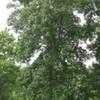
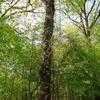
Grows 70–90 feet tall (occasionally 120 feet) with a straight trunk and narrow, irregular crown. Bark on mature trees separates into long, thick, curving plates that detach at both ends. Leaves are pinnately compound, 5 leaflets, turning golden-yellow in fall. Nuts are 1–2 inches, enclosed in a thick, four-ribbed husk that splits open at maturity. Kernel is sweet and edible.
Prefers deep, moist, well-drained soils but adapts to drier uplands. Full sun. Hardy in USDA zones 4–8. Slow-growing; taproot makes transplanting difficult. Nuts feed squirrels, chipmunks, turkeys, and many birds. Wood used for tool handles, furniture, flooring, and smoke flavoring.
Shade tree for large properties, natural areas, nut orchards, wildlife plantings. Not for small yards due to size, nut litter, and slow growth. Plant where its bark can be appreciated year-round.
Cracking Ultra-Hard Hican Nuts: The Brick-and-Hammer Method
Octopus Agave (Agave vilmoriniana): The Soft, Recurving Agave with No Teeth
Pseudorhipsalis ramulosa: A Flattened, Epiphytic Cactus with Red-Suffused Stems
Sapodilla (Manilkara zapota): Tropical Fruit with Chicle Legacy
Sausage Tree: Africa's Bizarre & Beautiful Kigelia
Kashmir Cypress (Cupressus cashmeriana): The Weeping Conifer of the Himalayas
Pignut Hickory (Carya glabra): The Tough, Tall Native for Wildlife & Wood
Coral Aloe (Aloe striata): Smooth Striped Winter Bloomer
Tasajillo (Cylindropuntia leptocaulis)
Austrocylindropuntia verschaffeltii: A Cylindrical, Jointed Cactus
Striata Agave (Agave striata): A Spherical, Needle-Leaved Agave
Rebutia mentosa: A Small, Clustering, Orange-Flowered Cactus
Copyright © www.100flowers.win Botanic Garden All Rights Reserved