


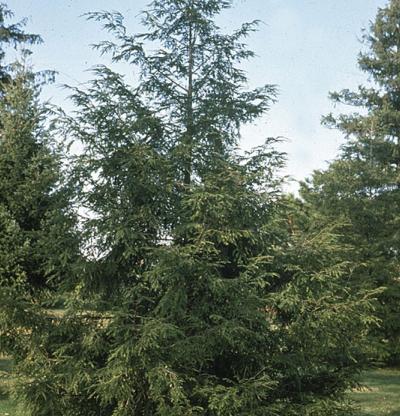
Canadian hemlock (Tsuga canadensis) is a majestic native conifer forming a broadly pyramidal tree 60-70 feet tall at maturity. Its finely textured, slightly drooping branchlets bear short, dark green needles with silvery undersides. Small oval cones and deeply furrowed bark add winter interest. This shade-tolerant evergreen is versatile for hedges, screens, specimens, or group plantings in woodland settings.
Prefers moist, well-drained soil (acidic to slightly alkaline) in part shade to full shade. Tolerates full sun in cool climates with adequate moisture. Young trees are especially shade-tolerant. Shelter from drying winds.
Water regularly until established. Mulch to conserve moisture and keep roots cool. Prune hedges in late summer or early fall. Monitor for hemlock woolly adelgid, a serious pest in many regions.
Woolly adelgid, scale, mites, aphids, borers, needle blights, rust, butt rot, and gray mold can affect stressed trees. Healthy, well-sited plants are more resilient.
Dryopteris tokyoensis (Tokyo Wood Fern): Upright Ladder-Like Fronds for Shade
Hosta 'June' (Hosta 'June'): Bluish Leaves with Creamy Gold Centers
Lindheimer's Muhly: Upright Blue-Gray Foliage with Purplish Plumes
Palmer's Penstemon (Penstemon palmeri)
Rhododendron calendulaceum: Flame Azalea
Giant Coneflower (Rudbeckia maxima): Dramatic Vertical Accent
Sweet Coneflower (Rudbeckia subtomentosa): Fragrant, Long-Blooming Native
Best Grass for Shade: Fine Fescue and Grass-Like Alternatives
Plants for Deep Shade: Hostas, Skimmia, Camellias, and Groundcovers
Shade Tree Alternatives to Maple, Oak, and Poplar
Native Prairie Wildflowers for a Sunny, Dry School Garden in New York
Greenhouse Winter Prep for Highland Nepenthes in Oregon
Carnivorous Plants Native to Oregon
Tricyrtis 'Tojen' (Toad Lily): Unspotted Lavender Orchid-Like Blooms
Copyright © www.100flowers.win Botanic Garden All Rights Reserved