


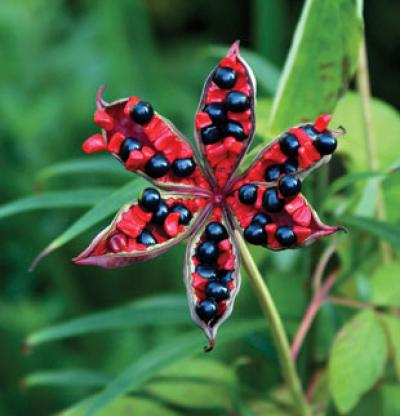
Paeonia obovata is a species peony prized not for its flowers but for its spectacular fall seedpods. In late summer, pods split to reveal gleaming blue‑black seeds nestled among brilliant red infertile seeds—a display that outshines the blooms. New growth emerges showy red before turning green. Small pink goblet flowers appear in late spring.
Peonies resent waterlogged or overly sandy soils. Plant at correct depth (eyes 2 inches below surface). Remove spent foliage in fall to prevent fungal spores.
Divide in autumn; root cuttings in winter.
Beds, borders; woodland garden style.
| Height | 28–36 in. |
| Spread | 28–36 in. |
| Growth Habit | Spreads |
| Growth Pace | Moderate |
| Light | Part Shade Only |
| Moisture | Medium |
| Maintenance | Low |
| Bloom Time | Spring |
| Flower Color | Pink |
| Type | Perennial |
Fixing Pink Hydrangeas: Aluminum Sulfate for Blue Flowers
Why Your Mexican Butterworts Won't Flower: Fertilization Fix
Utilizing a Wild Passionflower Field: Edible, Medicinal, and Commercial Uses
Patio Herb Garden (SE VA): Cilantro/Dill Bolting, Tomato Blossom End Rot
Top Flowering Plant for Nursing Home: Kalanchoe
Dividing and Propagating Alocasia (Elephant Ear) and Seed Collection
Caring for a Gift Hanging Petunia: Pruning, Overwintering & More
Winter Care for Dahlia Flowers: Essential Tips for Success
Diagnosing Brown Spots on Magnolia Flowers: Botrytis vs. Beetle Damage
Zone 7 Hillside Garden: Heat, Humidity, Clay, and Deer? Plants That Actually Survive
Identifying Purslanes: Annuals That Self-Seed
Designing a Four-Season Perennial Garden in Zone 6
Staking Campanula sarastro (Bellflower) and Ants on Clematis
Designing for Continuous Bloom in Quogue, NY: Succession Planting Guide
Copyright © www.100flowers.win Botanic Garden All Rights Reserved