


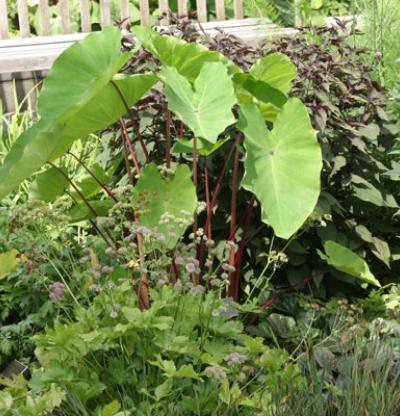
Colocasia esculenta 'Rhubarb' (kol-oh-KAY-shah ess-kew-LEN-tah) earns its name from the slender red stems that support its spade-shaped foliage—far more ornamental than kitchen garden rhubarb.
Give 'Rhubarb' full sun or partial shade and rich, moist soil, and it will produce lots of pretty leaves on exciting red stems. This elephant's ear can even live happily submerged in water. Gardeners in cool hardiness zones may overwinter tubers indoors covered by peat moss during winter, after leaves have been desiccated by frost.
Plant 'Rhubarb' tubers when soil is consistently around 70°F. Separate offsets in spring or summer.
If tubers are kept too wet during winter storage, they may rot. Keep tubers and peat moss slightly damp, never wet.
Yellow Taro (Colocasia) Flops Over in Pond: Stabilizing Top-Heavy Plants
Lady's Mantle (Alchemilla mollis): Chartreuse, Dew-Catching Foliage for Shade and Borders
Colocasia esculenta 'Black Beauty' – Dark Purple Elephant's Ear for Sun
Colocasia esculenta 'Black Magic' – Deep Purple Elephant's Ear for Wet Sites
Colocasia esculenta 'Coffee Cups' – Unique Cup-Shaped Foliage on Black Stems
Colocasia esculenta 'Diamond Head' – Glossy Black Foliage for Water Features
Variegated Tapioca: Striking Foliage Annual for Sun or Shade
Red Aloe (Aloe cameronii): Wine-Red Foliage and Winter Blooms
Vetiver Grass (Andropogon zizanioides): Adaptable Ornamental with Sunset Foliage
Astilboides (Astilboides tabularis): Giant Lily-Pad Leaves and Creamy White Panicles
Begonia 'Escargot': Iconic Snail-Patterned Rex Begonia
Begonia 'Marmaduke': Chocolate-Speckled Golden Rex Begonia
Japanese Barberry (Berberis thunbergii): Colorful but Invasive Shrub
Copyright © www.100flowers.win Botanic Garden All Rights Reserved