


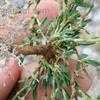
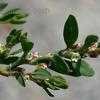
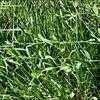
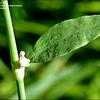
Prostrate knotweed (Polygonum aviculare), also known as birdgrass, doorweed, or waygrass, is a low-growing annual or short-lived perennial herb belonging to the buckwheat family (Polygonaceae). This cosmopolitan weed thrives in compacted soils along paths, driveways, and disturbed ground, earning its common names from its habit of growing in doorways and along waysides.
The plant forms dense, wiry mats up to 50 cm wide, with slender, branching stems that radiate from a central taproot. Leaves are alternate, narrow, and lance-shaped, measuring 1–4 cm long, with a distinctive silvery sheath (ocrea) at the base. Tiny, greenish-white flowers appear in leaf axils from spring through autumn, each barely 2–3 mm long. The fruit is a shiny, three-angled achene.
| Family: | Polygonaceae |
| Genus: | Polygonum (pol-LIG-go-num) |
| Species: | aviculare (a-vik-yoo-LAIR-ee) |
| Synonyms: | Polygonum aviculare var. vegetum, P. heterophyllum, P. monspeliense |
Native to Eurasia but now naturalized worldwide, prostrate knotweed flourishes in sunny, compacted, nitrogen-rich soils. It is a common sight in sidewalk cracks, gravel paths, athletic fields, and overgrazed pastures. Its deep taproot allows it to survive drought and heavy foot traffic.
While often considered a nuisance weed, the seeds provide food for sparrows, finches, and other granivorous birds. The foliage hosts larvae of several moth species. In traditional herbalism, the plant has been used as an astringent and diuretic, though modern clinical evidence is lacking.
Cultural control focuses on relieving soil compaction and improving turf density. Pre-emergent herbicides applied in early spring can reduce germination. Hand-pulling is effective when soil is moist, but the taproot must be removed to prevent regrowth.
Euonymus fortunei 'Blondy': Wintercreeper – Bold Yellow Variegation on Green Leaves
Silver Buffaloberry (Shepherdia argentea): Thorny Native Shrub
Wintercreeper 'Sunspot' (Euonymus fortunei): Gold-Splashed Evergreen
Potentilla neumanniana (Spring Cinquefoil)
Blue Chalksticks (Senecio repens syn. Kleinia repens): A Striking Succulent for Containers
Prostrate Rock Cotoneaster – Brilliant Fall Color & Red Berries
Prostrate White Abelia – Fragrant White Flowers, Arching Branches
Lepismium cruciforme (Trailing Cactus)
Echinocereus scheeri subsp. gentryi: A Clumping, Pink-Flowered Hedgehog
Yellow Wood Sorrel (Oxalis stricta): A Common Wildflower
Gardenia 'Radicans' (Gardenia jasminoides): Dwarf Fragrant Evergreen
Carolina Geranium (Geranium carolinianum): Native Annual Cranesbill
Copyright © www.100flowers.win Botanic Garden All Rights Reserved