


Growing from a single rhizome, or bulb, this plant requires wet growing conditions in order to remain healthy. These oddly shaped flowers bloom in June and July outdoors, but from spring into fall if kept at the proper temperatures indoors. Otherwise, these plants provide beautiful leaves for the rest of the year.
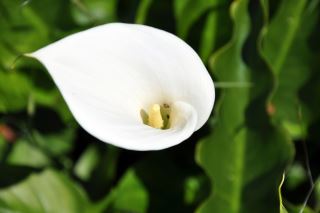
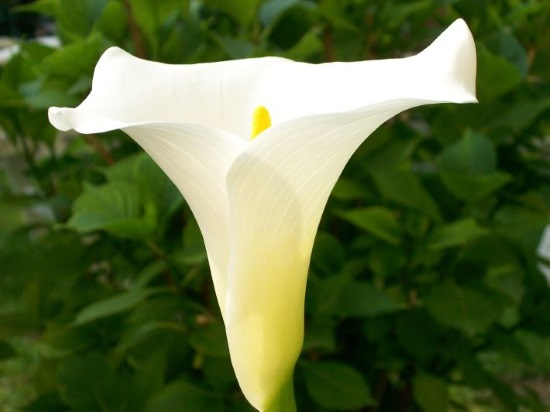
How it looks: This plant grows directly from its bulb, without any stems in between. Large leaves open up just above the soil, and rise 2 to 3 feet into the air as they unfurl. The trumpet shaped flowers grow a few inches or so above the dark green foliage at the top of a tall stalk.
A single bulb will produce multiple leaves and flowers. Leaves are shaped like an arrow and grow quite dark. The white flowers can grow up to 10 inches long each. Every bloom produces a large, single-petal flower that resembles an upturned bell with one side stretched out of proportion. The center stamen is always yellow.
Flowering: The Calla Lily requires no encouragement to get it to bloom. So long as the moisture and light conditions are within tolerance levels of the plant, the blooms will occur without any special attention.
Poisonous for pets: Calla lillies are toxic for pets including dogs and cats if they ingest this plant. Look for signs of mouth irritation, problems swallowing, vomiting or any other unusual symptoms and take your pet to the vet asap to get treated.
Flowering Problems
If you lily refuses to flower for an entire growing season, the problem is likely in the soil. Test the potting soil for pH. The soil pH should be between 6.0 - 6.5 for a healthy plant.
If your soil pH is within limits, you might be over watering. Check the moisture level of the soil and adjust so that it is moist, but never soggy, three inches down.
For a plant with good soil pH and good moisture, the problem may be too little sunlight. Increase its light, but not its temperature. Any changes will require at least four weeks to produce blooms.
Copyright © www.100flowers.win Botanic Garden All Rights Reserved