


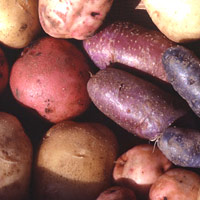
The potato ranks with wheat, rice, and corn as one of the world's most important staple crops. A resurgence of interest in homegrown potatoes has brought a wide array of colors, shapes, and flavors.
Most gardeners plant "seed" potatoes—small tubers, not true seeds. Buy certified seed potatoes inspected for disease freedom. Avoid supermarket potatoes, which may have growth inhibitors. Try unusual varieties like fingerlings or blue potatoes.
Choose a site with full sun and deep, well-drained soil. Loosen soil to 12–15 inches and mix in a 2- to 4-inch layer of compost.
Buy early varieties for planting as soon as soil can be worked in spring. In the North, plant later varieties mid-May to early June, 4–5 weeks after early types. In the South, plant late varieties 1–2 weeks after early ones. Cut seed potatoes into pieces with 2–3 eyes each a few days before planting. Dig trenches 6 inches wide, 6 inches deep, 30–36 inches apart. Space seed pieces 10–15 inches apart in the trench and cover with 4 inches of soil.
Protect emerging plants from hard late spring frosts with soil or covers. Hill soil against plants about a week after leaves emerge; repeat 2–3 weeks later. Ensure adequate water 6–10 weeks after planting when tubers form. Contact your extension office for Colorado potato beetle, European corn borer, and leafhopper controls.
Harvest small "new" potatoes about 10 weeks after planting. Harvest storage potatoes after vines die and tubers develop tough skins. In the North, harvest before fall frosts.
Why Tomato Seedlings Turn Purple and How to Fix It
Starting a Nectarine Tree from Seed in North Texas: Worth the Effort?
Transplanting Sprouted Avocado Seeds from Water to Soil
Growing Hippeastrum (Amaryllis) from Seed: A Step-by-Step Guide
Garlic "Seeds": The Flower Head Isn't Seed—Plant Cloves Instead
Growing a Peach Tree from a Grocery Store Pit: Stratification & Care
Planting Grass Seed for Erosion Control on a Riverfront Property in North Carolina
Copyright © www.100flowers.win Botanic Garden All Rights Reserved