


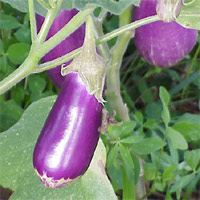
Eggplants range from long and thin to round and fat, egg- to melon-sized, in a rainbow of colors—purple, pink, white, orange, and green. They shine in hors d'oeuvres, main dishes, grilled recipes, and pickled condiments.
Eggplants are tender herbaceous perennials grown as annuals. Their purple flowers and large, purple-tinged leaves combine with colorful fruit for a stunning garden presence. They thrive in heat and humidity that wilts other crops. Practice crop rotation: avoid planting where tomatoes, potatoes, or peppers grew in the last 3–4 years, as they share pests.
Choose a site with full sun and fertile, well-drained soil. Prepare the bed by loosening soil to 12–15 inches and mixing in a 2- to 4-inch layer of compost.
Start seeds indoors in flats or peat pots about 2 months before soil warms in your region, or buy transplants just before planting. Cover beds with black plastic to warm heavy clay soils. Transplant after all frost danger has passed, spacing plants 18–24 inches apart.
Apply organic mulch to retain moisture and control weeds once soil has fully warmed (about 1 month after transplanting). Water during summer if rainfall is less than 1 inch per week. Contact your extension office for pest controls (flea beetles, Colorado potato beetles, tomato hornworms).
Most eggplants are ready at 4–5 inches long. Skin should be shiny; dull skin indicates overripeness. Cut with a sharp knife, leaving at least 1 inch of stem attached.
Why Your Eggplant Flowers Drop Before Fruiting
Stunted Tomatoes, Peppers, and Eggplants in Cool Weather
Growing Eggplant: Staking, Fruit Protection, and Normal Growth Patterns
Eggplant Blossom Drop: Pollination and Water Fixes
Growing Eggplant: From Seedling to Harvest in the Home Garden
Pollinating Eggplants: Tap Flowers and Hum Engelbert Humperdinck
Testing Soil for Contaminants and Reviving Freeze-Damaged Eggplants
When to Pick Eggplant and Butternut: Color Over Size
Asparagus Fern Care: Light, Water & Propagation Tips
Grafting Tomatoes onto Eggplant Rootstock for Off-Season Production
The Nightshade Family: Tomatoes, Peppers, Eggplants & Potatoes
Growing Eggplant: Heat-Loving Beauty for the Garden and Table
How to Grow Pumpkin on a Stick (Ornamental Eggplant): A Conversation-Piece Plant
Copyright © www.100flowers.win Botanic Garden All Rights Reserved