


Tillandsias are epiphytic bromeliads that grow without soil, absorbing water and nutrients through their leaves. They attach to trees, rocks, or decor in nature. Indoors, they can be mounted on wood, shells, in terrariums, or displayed in creative holders. Only need misting/soaking and bright filtered light.
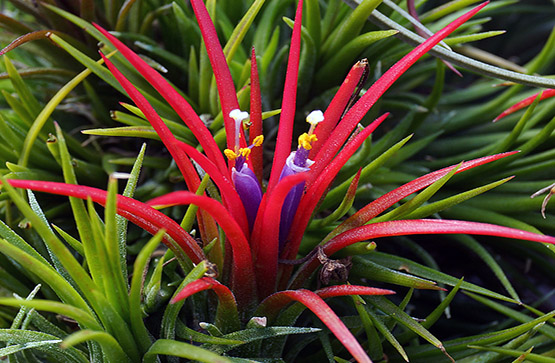
Bright filtered light. East/west window ideal. No direct hot sun. Fluorescent lights work.
50–90°F (10–32°C). Protect from frost.
Misting: 2–3x week (dry climates: daily). Soaking: Submerge 20–30 min weekly. Shake off excess, dry upside down 4 hrs. Use rain/filtered water.
Higher humidity reduces watering frequency.
Glue (E6000), wire, or tuck into crevices. No soil. Avoid copper wire.
Monthly with bromeliad/air plant fertilizer (1/4 strength) in soak water.
Offsets ("pups") form at base after flowering. Remove when 1/3 mother size.
Caring for Established Blue Euphorbia: Watering Timing Matters
Plants Around a Chlorinated Pool: Salt Is the Real Enemy
Killing Thorny Pasture Weeds Without Harming Cattle or Grass
Yucca Plant Lost Leaves: Likely Needs Replacement
Do Aloe Plants Have Male/Female Sexes?
Sunlight vs. Artificial Light for Plant Growth
Native Prairie Wildflowers for a Sunny, Dry School Garden in New York
Aphids on Drosera filiformis: Safe Insecticide Resources
LED Grow Lights: Intense for Low-Light Plants, Good for Nepenthes Supplement
Mealybugs on Drosera multifida: Systemic Treatment Required
Building a Microbog in a Chicago Kitchen Sink: Drainage, Hardy Species, and Winter Mulching
Incorporating Carnivorous Plants into an Indoor Topiary Art Project
Understanding Light Terms: Filtered vs. Partial Sun and Fluorescent Equivalents
Deionized Water for Carnivorous Plants: Testing and Validation
Copyright © www.100flowers.win Botanic Garden All Rights Reserved