


Shade gardens gain year-round structure and beauty from evergreen shrubs adapted to low-light conditions. These selections thrive where sun-loving plants fail, offering foliage interest, flowers, and wildlife value in challenging spots.
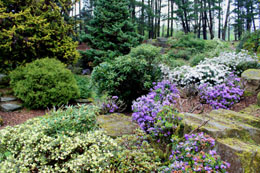
Species: 1000+; heights 1-30 meters
Best for shade: Large-leaved types (R. catawbiense, R. maximum); yakushimanum hybrids
Conditions: Acidic (pH 4.5-6), well-drained, organic soil; protected from winter sun/wind
Bloom: Spring; spectacular trusses
Note: Shallow roots—mulch well; avoid cultivation
Size: 6-15 feet
Bloom: Winter-spring; white, pink, red; single to formal double
Conditions: Part to full shade; acidic, moist, well-drained soil
Caution: Shallow roots—don't plant near competitive trees; protect from harsh frost
Types: C. sasanqua more sun tolerant; fall bloom
Range: 2-12 meters; leaves 0.3-2.5 cm wide, 1.5-5 cm long
Shade tolerance: Excellent—thrives in deep shade
Uses: Hedges, topiary, foundation, specimens
Conditions: Well-drained; adaptable pH; protect from winter wind
Size: 2-13 meters (cultivars smaller)
Leaves: Lanceolate, 8-25 cm long, glossy; variegated forms popular
Shade tolerance: Excellent—even deep shade
Flowers: Small, purple; female plants have red berries with male nearby
Conditions: Moist, well-drained; adaptable
Native: Southeast US wetlands
Size: 3-9 feet; arching habit
Leaves: Smooth, 1-3 inches; colorful new growth
Flowers: White/pink urn-shaped; spring
Conditions: Moist to wet, acidic soil; shade to part sun
Uses: Naturalistic, rain gardens, stream banks
Size: 15-20 feet tall, 6 feet wide
Features: Dense, dark green foliage; uniform pyramidal
Shade tolerance: Good—better than most conifers
Uses: Hedges, screens, windbreaks
Conditions: Moist, well-drained; adaptable
Best Fertilizer Method for Trees and Shrubs: Granular Broadcast
Evergreen Shrubs Turning Rust Color: Mite Damage vs. Salt Injury
Best Flowering Shrubs for Full Sun Gardens
Common Landscaping Shrubs: Top Picks for Every Garden Role
Top Evergreen Shrubs for Year-Round Garden Structure
Designing a Shade Garden in Cleveland, Ohio
Landscaping with Shrubs & Bushes: Design, Selection & Top Picks
Best Evergreen Trees and Shrubs for Year-Round Landscape Beauty
Shade-Tolerant Shrubs and Plants for a Beautiful Shady Garden
Beginner Garden for Shade: Low-Maintenance Three-Season Beauty
13 Japanese Maples for Shade: Green and Variegated Cultivars with Stunning Texture
Copyright © www.100flowers.win Botanic Garden All Rights Reserved