


After five years of watching grass fail under dense cherry tree shade, I gave up and planted shade-loving perennials – hydrangea, impatiens, hosta, and ivy. The area looks better than ever. This experience underscores a key truth: growing grass in shade is an uphill battle.
Under trees, both the quantity and quality of light change. Full sun provides "near red" wavelengths; shade shifts to "far red," less effective for photosynthesis. Grass leaves and stems become thinner. Dew evaporates slower, increasing disease risk. It's remarkable any grass grows at all.
Under high pine shade: bermudagrass and zoysiagrass can succeed.
Under dogwood/oak shade: both fail miserably.
Cool-season grasses: Fescue is the most shade-tolerant for Atlanta. Fine fescues may survive in some spots. Seed/sod early in fall so grass matures before leaf cover. Remove leaves by raking, blowing, or bagging to prevent smothering. Cool-season grasses grow long after deciduous trees drop leaves.
Warm-season grasses: Generally, bermudagrass is shade-intolerant. However, TifGrand and Celebration cultivars persist well with 6+ hours of filtered/intermittent shade. Centipedegrass needs similar light.
Some St. Augustinegrass cultivars tolerate shade: Palmetto, Mercedes, Raleigh.
Some zoysiagrass cultivars tolerate limited light: El Toro, JaMur, Zeon, Zorro (5+ years under heavy hardwood shade). Cavalier also reported shade-tolerant; older Meyer has fair tolerance.
In areas where even fescue fails, consider light-colored groundcovers, pinestraw, or pine chips. As a gardener friend says, "Nature always bats last!"
See also Using Mondo Grass for a Lawn.
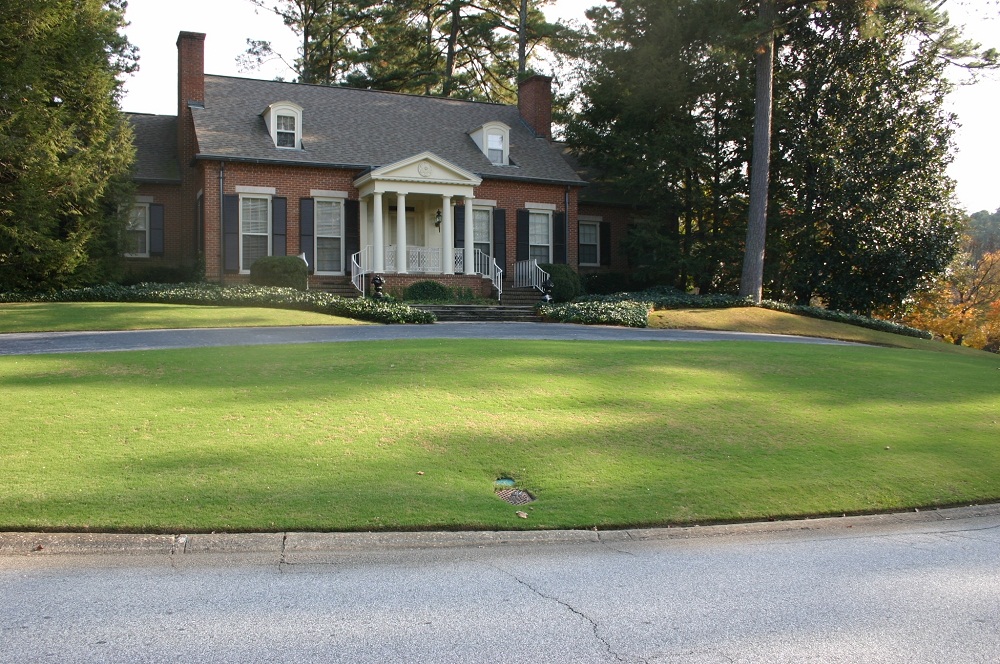
shady lawn
Spotty Lawn Under Redwoods (Sacramento): Shade-Tolerant Fescue or Grass-Like Covers
Growing Ground Cover Under Mature Maple Trees: Solutions for Shade and Root Competition
Grass Won't Grow Under a Maple? It's Shade, Not Just Roots
Growing a Dog-Friendly Lawn: Grass Selection, Shade, and Urine Management
Growing Grass in Heavy Shade: Reality Check and Practical Solutions
Establishing Shade Lawns Under Maple Trees
How to Reseed a Lawn: Complete Guide to Overseeding and Renovation
Lawn Burned by Fertilizer on Yellow Spots: Diagnosis and Recovery
Fairy Ring in Lawns: Mycelium Mats Block Water and Require Aeration Plus Fungicide
Growing Grass in Deep Shade: Realistic Expectations
Managing Spongy Bermuda Lawn on Sandy Soil
Moss Control in Pennsylvania Lawns
Growing Grass in Shade: Realistic Expectations & Cultural Practices
Choosing the Best Lawn Grass: Sun, Budget, and Maintenance Realities
Copyright © www.100flowers.win Botanic Garden All Rights Reserved