The first 4–6 weeks after sod installation determine long-term success. Shallow roots need consistent moisture, gentle nutrition, and protection from traffic. This day-by-week schedule covers watering, mowing, fertilizing, pest monitoring, and troubleshooting—so your investment becomes a thriving lawn, not a brown regret.
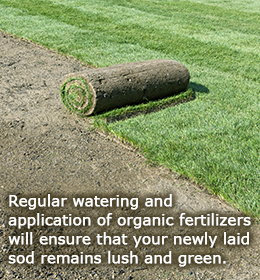
Week 1–2: Critical Establishment Phase
Watering (Non-Negotiable)
- Frequency: 2–3× daily (early AM, noon, late PM)
- Duration: 5–15 min per zone (adjust for sprinkler output)
- Goal: Sod + top 1–2″ soil constantly moist—not soggy, never dry
- Check: Lift a corner daily. Soil should be wet to 2–3″ depth. Probe with screwdriver.
- Hot/windy days: Add a 4th cycle. Missed watering = dead sod in hours.
Fertilizing
- Apply starter fertilizer (high phosphorus, e.g., 18-24-12) at install or day 1–2.
- Organic options: compost tea, fish emulsion, granular biosolids.
- Repeat at week 3–4 if not in soil prep.
Traffic & Mowing
- Zero foot traffic—including pets and kids. Use plywood paths if essential.
- No mowing until roots resist tug test (day 10–14).
Week 3–4: Transition Phase
Watering
- Reduce to 1× daily, 20–30 min (deeper soak).
- Then every other day, 30–40 min.
- Monitor: if blades fold/curl or footprint remains > 30 sec → water more.
First Mow
- When grass reaches 3.5–4″ (typically day 14–21).
- Set deck high: cut to 2.5–3″ (remove ≤ ⅓ blade).
- Bag clippings. Sharp blades only.
- Mow mid-morning (dew dry) or late afternoon.
Fertilizing
- If starter not applied at install, apply now.
- Otherwise, wait until week 5–6 for standard seasonal feed.
Week 5–8: Establishment Phase
Watering
- Taper to 2×/week, 30–45 min (1–1.5″ total/week).
- Early morning only (4–8 AM). Reduces evaporation, disease risk.
- Adjust for rain: skip if > ½″ fell.
Mowing
- Weekly at species height: Fescue 3–3.5″, Bermuda 1.5–2″, Zoysia 1–2″, St. Augustine 3–4″.
- Never remove > ⅓ blade. Alternate pattern.
Fertilizing
- Standard N-P-K per grass type/region. Slow-release preferred.
- Organic: 1×/month growing season (compost, meals, biosolids).
Ongoing Care: Pest, Weed & Disease Watch
Weeds
- Hand-pull early (taproot removal).
- Corn gluten meal (pre-emergent) at week 6 if spring install.
- Spot-spray selective herbicide only after 3rd mow (label check).
Pests
- Grubs: Check late summer (peel back sod, count). > 5/sq ft = treat.
- Chinch bugs: Flotation test (coffee can + water). Threshold: 20–25/sq ft.
- Sod webworms: Soap flush (2 tbsp dish soap/gal water). Birds feeding = sign.
- Treat only confirmed pests; use targeted, bee-safe products.
Diseases
- Brown patch, Pythium, dollar spot—favored by excess N, night watering, humidity.
- Prevent: morning water, moderate N, sharp mower, airflow.
- Curative fungicide only if cultural fixes fail.
Special Situations
| Scenario | Adjustments |
|---|
| Shady site | Water deeper/less frequent; expect slower rooting (add 2 wks); use shade-tolerant sod |
| Sloped site | Cycle-soak watering (3×5 min vs 1×15 min); stake sod on steep slopes |
| Winter install (mild climate) | Water 1×/2–3 days; no fertilizer until spring; traffic ban 6+ wks |
| Patch repair | Same protocol; hand-water edges daily; blend into existing lawn |
Pro Tips for Sod Success
- Probe test: 12″ screwdriver slides in easily = adequate moisture.
- Edge watering: Sprinklers miss perimeters. Hand-water borders daily week 1–2.
- Pre-install prep: Till, level, amend, pre-water—see full guide.
- Buy fresh: Cut < 24 hrs before delivery. Same batch, same age.
- Document: Photos weekly. Helps diagnose issues; tracks progress.
When to Worry
- Large brown patches not greening by day 14 → root failure (dry, heat, poor contact)
- Mushrooms = harmless saprophytes (decaying organic matter). Ignore.
- Yellowing = usually N deficiency or overwatering. Soil test guides fix.
- Sod lifting at corners = insufficient watering or rolling.
Patience + water + restraint = a lawn that lasts decades. The first month is the only month that matters this much.


