


When a leaning post oak threatened a home, arborist Chris Hastings used sonic tomography—driving metal pins into the trunk and tapping them with a sensor-equipped hammer—to map internal decay. Sound waves travel faster through solid wood; the computer generates a cross-sectional image showing sound vs. rotted areas.
In this case, the trunk was solid, but the severe lean warranted removal. The technology provides a non-invasive "MRI for trees," helping owners make informed decisions about risky trees.
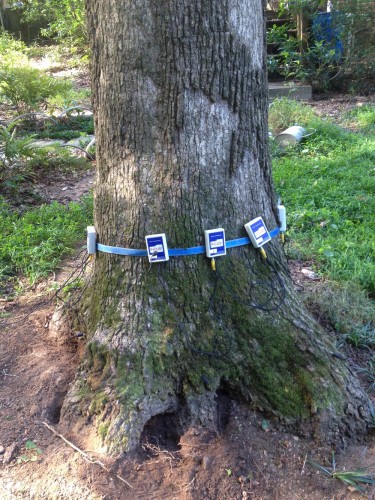
Sensors installed on trunk
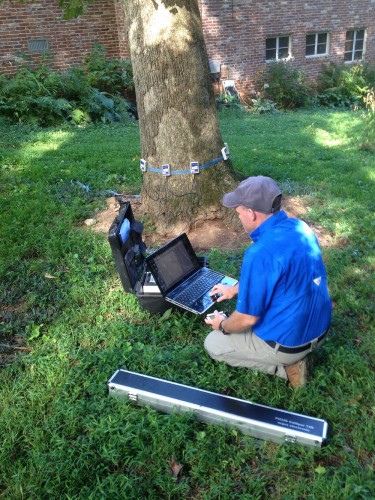
Connecting computer to sensors
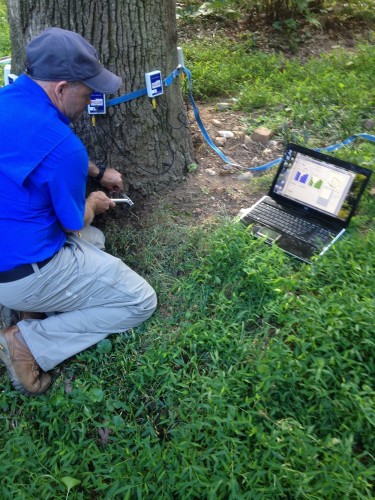
Tapping pins with special hammer
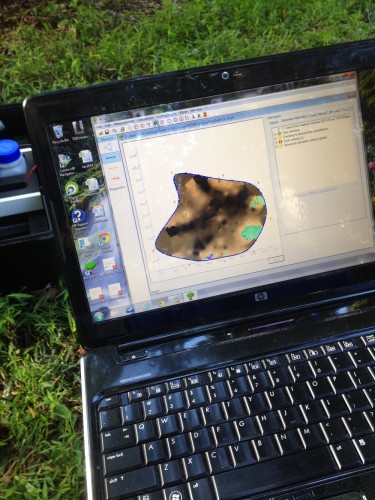
Interior cross-section of the trunk
Storm Damage on Mature Conifer: Wound Care and Long-Term Assessment
Maple Borer Infestation in Old Wound: Treatment and Risk
Mushrooms on Ash Trunk: Internal Decay, Not a Death Sentence
Maple Trunk Suckers: Normal Response to Sunlight
Tree Cavity in Deck Tree: Don't Fill, Fertilize
Hollow Birch Trunk: Decay Fungus, Tree Still Healthy
Bonsai Overview: History, Species Selection & Fundamental Techniques
Willow Recovery After Pond Herbicide Treatment
Deer Antler Damage on Red Maple: Emergency Response
Saving a Rotting Poplar: Fertilization for Structural Longevity
Ficus Tree Health: Sap Globules, Overpotting, and Light Needs
Mango Tree from Seed: Rootstock Suckers & Fruiting Reality
Neighbor's Holly Tree with Yellow Leaves: Assessing Health and Boundary Issues
The Catalpa Tree: Messy Magnificence and a Woodcarver's Dream
Copyright © www.100flowers.win Botanic Garden All Rights Reserved