


Proportion and scale are the most challenging concepts in landscape design. Spindly arbors and trellises look fragile; tiny flowerpots on a huge patio look sad and lonely. People fear going big, but as one designer noted, when the sky is your ceiling, you don't have to worry about doing something too large.
According to Design Through Discovery, proportion refers to size relationships within a composition (e.g., furniture in a room). Scale indicates size compared to a constant, like the human body—hence "small scale" and "large scale" for out-of-the-ordinary sizes.
When everything is in proportion and scale is appropriate, the space is visually exciting. Here are top examples from Houzz.
Line | Rhythm | Shape and Mass | Space | Texture | Color
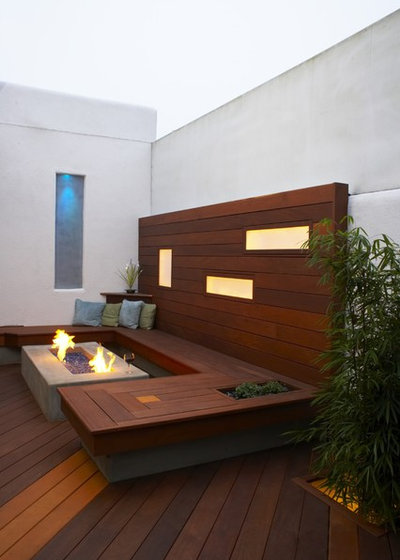
This outdoor living room features excellent proportion and scale. The height and depth of the floating wood structure relate equally. The wood wall is about two-thirds the height of the white stucco courtyard wall—a pleasing ratio. The U-shaped bench embraces a fire table that fits like a puzzle piece. Wide wood planks repeat the scale of diagonally laid decking—a nice contrast.
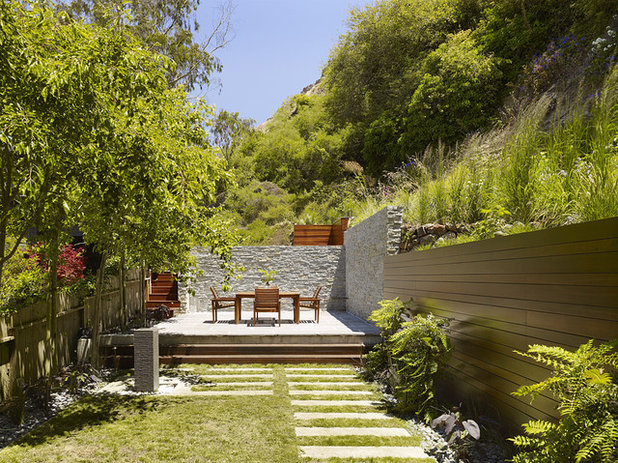
A beefy feeling in materials, yet proportion and scale feel completely appropriate for this narrow dining terrace. Elongated proportions offset narrowness: seen in the wood retaining wall, then repeated in the stone facade enclosing the raised platform. The dining set nicely occupies its space—nothing smaller would work.
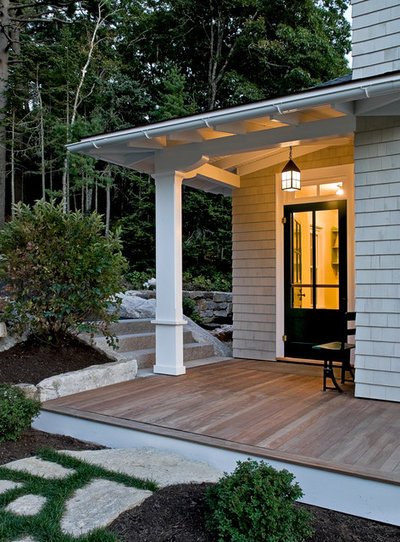
The home's exterior millwork is substantial, giving prominence to the overhanging porch roof. The support post blends with the overhead beam (10–12 inches), treated as architecture, not an afterthought.
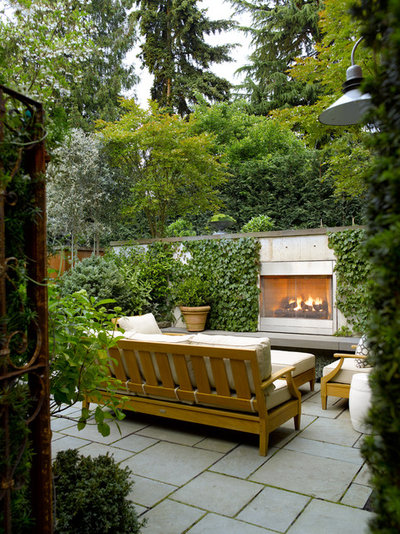
Imagine this outdoor living room with white wicker—it would feel lost. Instead, substantial teak sofa and armchairs relate beautifully to oversize bluestone pavers and fireplace wall. Furniture is scaled comfortably for the exterior, where large conifers loom overhead.
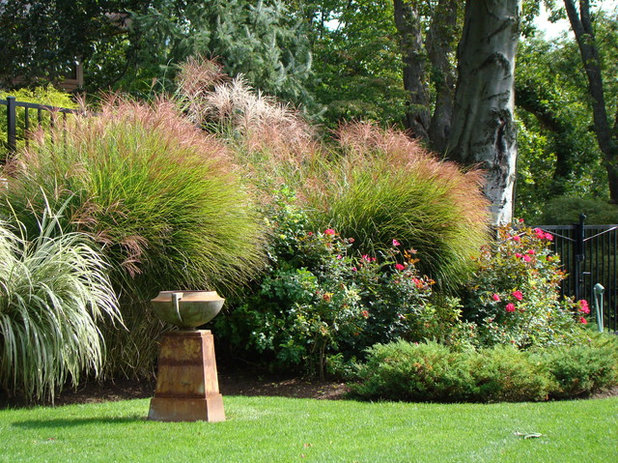
A classical bowl on a substantial pedestal has correct proportion within the space. It rests informally on turf and relates at half the height to ornamental grasses behind. The pedestal's volume echoes the tree trunk at far right—elegant appropriateness.
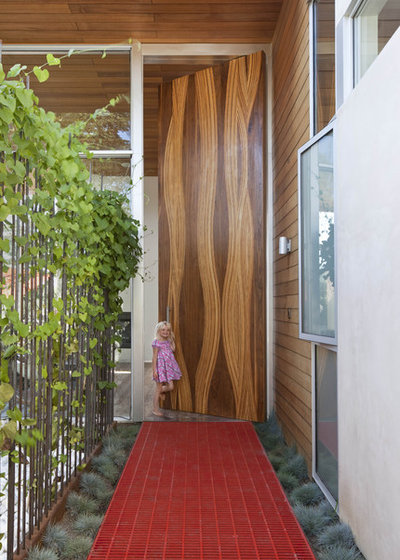
This gigantic door dwarfs the little girl—an exaggerated illustration of scale judged against the human body. Disproportion isn't always negative; the overscale door and decorative pattern are stunning, creating a strong relationship with the bold red entry walk for unforgettable impact.
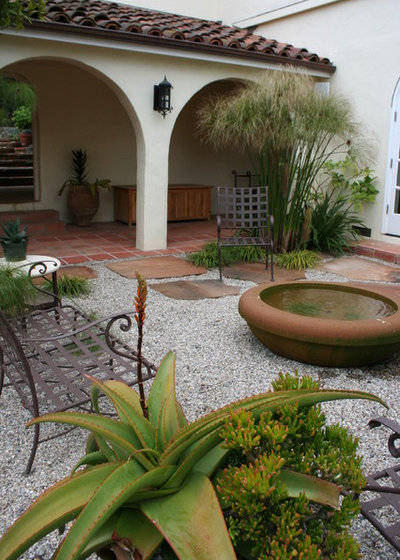
A single large-scale object makes a bigger splash than a cluster of small ones. This saucer-shaped water feature dominates but doesn't overwhelm a Spanish-style courtyard. Its dimensions match the arches across the loggia, unifying it with surroundings.
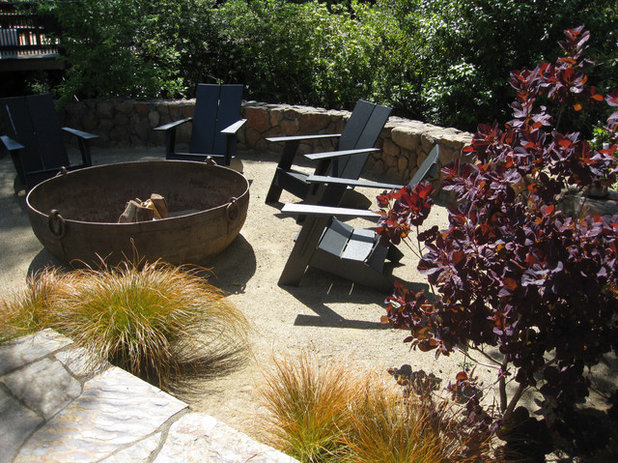
Similar confident scale: a massive fire pit from industrial metal salvage replaces flimsy imported pits. Proportion shines: surrounding space accommodates Adirondack chairs and a curved retaining wall.
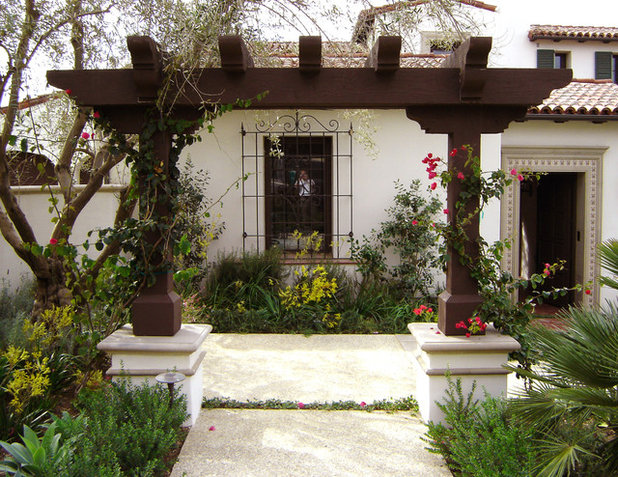
An arbor of massive timbers frames a gravel courtyard entry. Materials are proportionately accurate to the architecture; scale is appropriate—not too large, not too small.
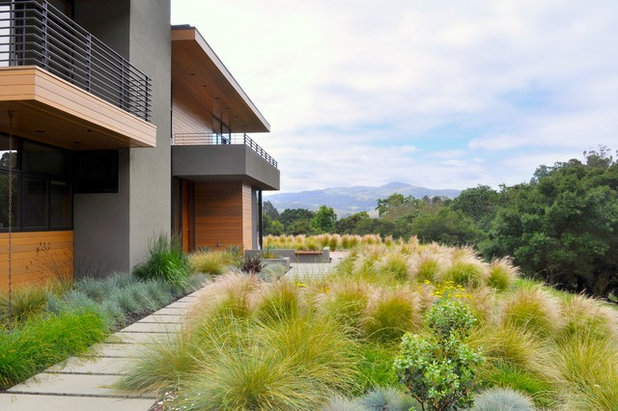
The home's height determines the landscape depth in front. Home scale and garden scale feel related; the eye moves comfortably from ground to vertical plane, creating harmony.
Designing and Building an Organic Vegetable/Herb Garden
Garden Design Fundamentals: Site Analysis, Layout, and Plant Selection
Year-Round Garden and Patio Design: Structure, Bloom Succession, and Outdoor Living
Garden Gazebos: History, Styles, and DIY Kits for Every Backyard
Front Garden Design Ideas to Boost Curb Appeal
Designing a Heritage Garden: History, Plants, and Personal Legacy
Designing Gardens with Plant Height: Scale and Layering Techniques
Small Garden Design Mastery: Space Optimization & Visual Expansion at Kite Landscapes
Flower Garden Layout Design: Planning Your Perfect Outdoor Sanctuary
Garden Design Principles: Create a Garden That Works for You
Garden Paths: Design Functional & Beautiful Circulation for Your Garden
Planning and Designing Garden Water Features
7 Ways to Design a Garden That Flows and Intrigues
Garden Design Fundamentals: How Shape and Pattern Define Style
Copyright © www.100flowers.win Botanic Garden All Rights Reserved