


By tucking plants into crevices and letting them spill naturally around the edges, your pond will appear as nature's own creation. Here's how to achieve this organic look.
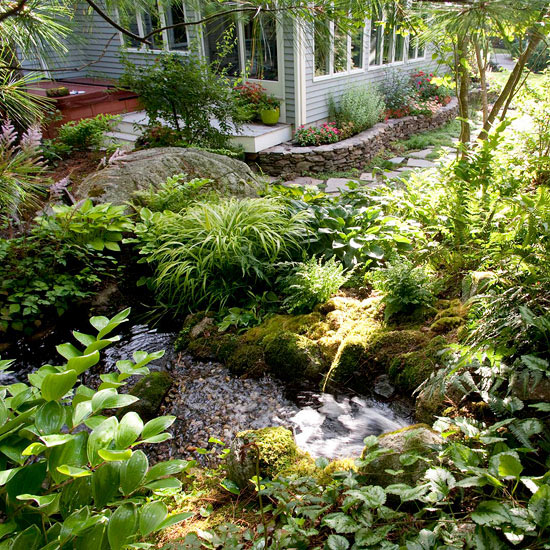
Add compost to build up the pond's edge, disguising the liner and securing plants firmly.

Remove ferns from containers, shake excess soil from roots. In tight spaces, wedge plants into crevices and between rocks, reducing each plant's footprint for a natural appearance.
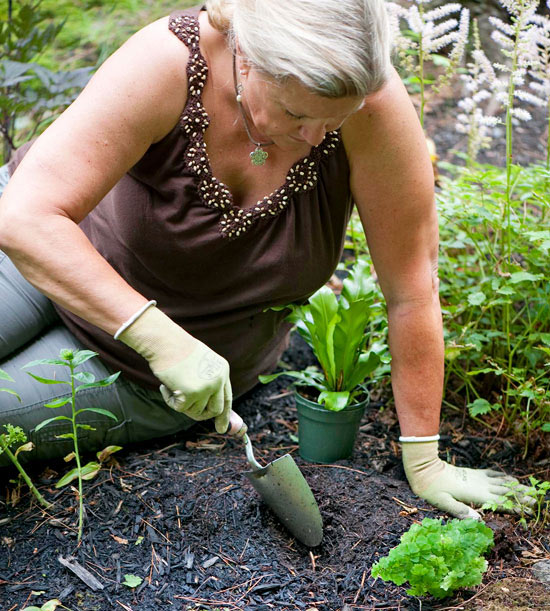
Using a hand trowel, carefully dig holes (avoiding liner damage) and insert ferns.
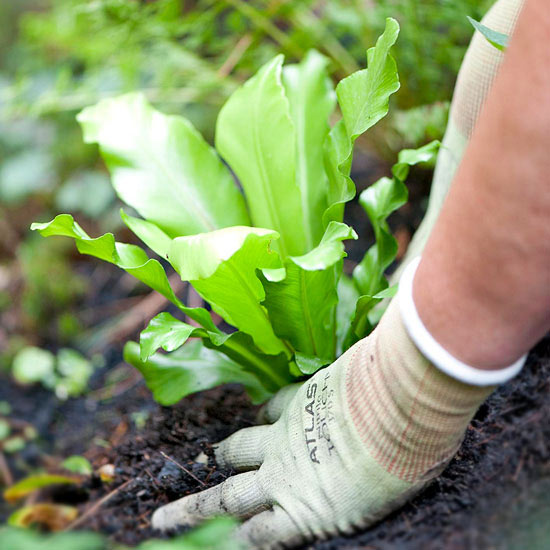
Firm each plant in place, pulling compost around roots. Water thoroughly and keep newly transplanted ferns moist for several days.
Learn more about ferns.
Pondside Mosquito & Fly Control: Larvae, Traps & Fish Solutions
Removing Storm-Washed Mud from a Lined Pond Without Draining
Terrestrial Calla Lily in a Koi Pond: Experiment with Caution
Boston Fern: Formaldehyde-Removing Sword Fern for Hanging Baskets
Kangaroo Fern (Microsorum diversifolium): Leathery, Odd-Shaped Fronds for Hanging Baskets
Staghorn Fern (Platycerium bifurcatum): Antler Fronds for Mounting
How to Grow Watermelons: From Seed to Sweet Harvest
Growing Pole Beans: Build a Teepee Trellis for Continuous Harvests
How to Plant Basil: Seeds or Transplants for Kitchen-Garden Freshness
Frosty Fern Care: Growing Selaginella kraussiana 'Variegatus' Indoors
Boston Fern Care: The Classic Victorian Houseplant
How to Plant a Tree for Long-Term Success
How to Plant Spring-Flowering Bulbs: Daffodils, Hyacinths, and Tulips
Copyright © www.100flowers.win Botanic Garden All Rights Reserved