


Selecting the right desert plants transforms a harsh environment into a thriving, colorful landscape. The key: choose species evolved for your specific conditions—then let them express their natural forms without forcing them into inappropriate roles.
| Tree | Height | Features | Water |
|---|---|---|---|
| Blue Palo Verde (Parkinsonia florida) | 20-30' | Green bark; yellow flowers; fast | Low |
| Desert Willow (Chilopsis linearis) | 15-25' | Orchid-like flowers; hummingbirds | Low-Mod |
| Honey Mesquite (Prosopis glandulosa) | 20-30' | Fragrant flowers; edible pods; nitrogen | Low |
| Ironwood (Olneya tesota) | 15-30' | Dense wood; lavender flowers; slow | Very Low |
| Palo Blanco (Mariosousa willardiana) | 15-20' | White peeling bark; delicate foliage | Low |
| Sweet Acacia (Vachellia farnesiana) | 15-25' | Fragrant yellow balls; evergreen | Low |
| Texas Ebony (Ebenopsis ebano) | 15-25' | Dense shade; fragrant flowers; thorns | Low-Mod |
| Plant | Height | Bloom | Color | Notes |
|---|---|---|---|---|
| Autumn Sage (Salvia greggii) | 2-3' | Spring-frost | Red, pink, coral | Hummingbirds; shear annually |
| Baja Fairy Duster (Calliandra californica) | 3-5' | Year-round | Red puffballs | Evergreen; hummingbirds |
| Brittlebush (Encelia farinosa) | 2-4' | Spring | Yellow daisies | Silver foliage; reseeds |
| Desert Marigold (Baileya multiradiata) | 1-2' | Spring-fall | Yellow | Short-lived; prolific seeds |
| Globe Mallow (Sphaeralcea ambigua) | 2-3' | Spring | Orange, pink, red | Fuzzy leaves; pollinators |
| Penstemon (P. eatonii, P. parryi) | 2-4' | Spring | Red, pink, purple | Hummingbirds; well-drained |
| Red Bird of Paradise (Caesalpinia pulcherrima) | 6-10' | Summer-fall | Orange-red | Deciduous; tropical look |
| Texas Ranger (Leucophyllum frutescens) | 5-8' | After rain | Purple | Silver leaves; "barometer bush" |
| Plant | Form | Size | Features | Hardiness |
|---|---|---|---|---|
| Agave parryi | Rosette | 2-3' | Blue-gray; terminal spine | Zone 5 |
| Agave americana | Rosette | 6-10' | Dramatic; offsets | Zone 8 |
| Yucca rostrata | Trunk + head | 6-15' | Blue sphere; architectural | Zone 5 |
| Opuntia spp. (Prickly Pear) | Pads | 1-6' | Flowers; edible fruit | Zone 4-9 |
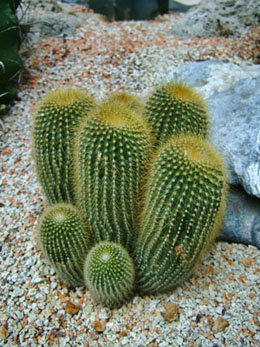
| Barrel Cactus (Ferocactus) | Column | 2-4' | Heavy spines; yellow flowers | Zone 9 |
| Saguaro (Carnegiea gigantea) | Column + arms | 40'+ | Iconic; slow; protected | Zone 9 |
| Ocotillo (Fouquieria splendens) | Spiny canes | 8-20' | Red tips after rain | Zone 8 |
| Sotol (Dasylirion wheeleri) | Rosette | 3-5' | Toothed edges; tall bloom | Zone 6 |
| Hesperaloe (Red Yucca) | Grass-like | 3-4' | Coral spikes; evergreen | Zone 5 |
The original article listed: Joshua Tree, Jumping Cholla Cactus, Bottle Brush, plus extensive lists of Trees (Blue Palo Verde, Desert Hackberry, Desert Willow, Fern-of-the-Desert, Honey Mesquite, Ironwood, Little Leaf Palo Verde, Palo Blanco, Shoe String Acacia, Sweet Acacia, South American Mesquite, Texas Ebony), Perennials/Wildflowers (Arizona Yellow Bells, Arizona Rosewood, Autumn Sage, Baja Fairy Duster, Bush Dalea, Brittlebush, Chuparosa, Creosote, Desert Marigold, Globe Mallow, Hopbush, Little Leaf Cordia, Ocotillo, Quail Bush, Red Bird of Paradise, Red Firecracker, Texas Mountain Laurel, Texas Ranger, Yellow Bird of Paradise), Groundcovers/Vines (Mexican Primrose, Trailing Lantana, Trailing Smoke Bush, Queen's Wreath, Yellow Orchid Vine), Succulents (Aloe Vera, Barrel Cactus, Beargrass, Banana Yucca, Beavertail Prickly Pear, Desert Spoon, Elephant Food, Hedgehog Cactus, Octopus Agave, Purple Prickly Pear, Saguaro Cactus, Soaptree Yucca).
Desert plants are not compromises—they are specialists. The agave that stores a year's water in its leaves, the ocotillo that leafs out overnight after rain, the sage that blooms when humidity spikes—these are evolutionary masterpieces. Plant them where they belong, give them a start, then step back. The desert garden grows itself.
Watering Desert Plants in Palm Springs: Establishment vs. Long-Term
Carnivorous Plants for Mosquito Control in Hot Climates: Reality Check
Evergreen Privacy Hedge for Zone 5/6: Deer-Resistant, Clay Soil, Sun/Shade Mix
Humidity for Houseplants: Methods to Raise Moisture Levels
DIY Landscaping: Design Principles and Plant Selection for Homeowners
Cactus House Plants: Easy Desert Dwellers for Sunny Windows
Smart Pool Landscaping: Beauty, Safety & Low Maintenance
Landscaping on a Budget: Smart Strategies for a Beautiful Yard Without Breaking the Bank
Desert Biome Plants: Cacti, Shrubs, Trees, and Wildflowers of American Deserts
Fast-Growing Trees: Instant Landscape Impact Without the Wait
Woody Perennials for Spectacular Fall Landscaping in the Midwest
Sahara Desert Plants: Survival Adaptations in Earth's Largest Hot Desert
Copyright © www.100flowers.win Botanic Garden All Rights Reserved