River rocks—smooth, rounded, multicolored stones shaped by water's patient work—bring immediate natural authenticity to landscapes. Their variety of sizes, colors, and textures makes them endlessly versatile for functional and decorative applications.
Understanding River Rock
- Formation: Tumbled by water flow, collisions, abrasion—smooth, rounded, polished
- Sizes: Pea gravel (3/8"), 1-2", 2-4", 4-8", boulders (12"+)
- Colors: Earth tones—tans, grays, browns, reds, blues, whites; often mixed
- Source: Quarried from ancient riverbeds; washed and sorted
Design Applications
Walls & Structural Elements
- Dry-stack walls: Larger rocks (6-12"+) for gravity walls; no mortar
- Veneer walls: Thin river rock slices on concrete block
- Fountain/pond surrounds: Rocks create naturalistic edges
- Column bases: Stone veneer on porch/pergola posts
- Fire pit walls: Heat-resistant, rustic aesthetic
Combine with: native plantings, ornamental grasses, conifers for year-round structure.
Walkways & Paths
- Stepping stones: Large flat rocks (18-24") set in gravel/groundcover
- Gravel paths: 3/8" or 3/4" rock with solid edging; compact for stability
- Mosaic paths: Set small rocks in mortar for artistic patterns
- Dry stream beds: Functional drainage + visual feature; line with varying sizes
Color coordination: match rock tones to house materials (brick, stucco, roof).
Water Features
- Pond edges: Large rocks conceal liner; smaller rocks at waterline
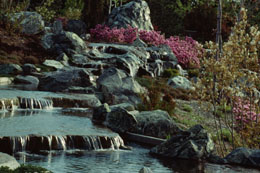
- Waterfall construction: Flat rocks for spillways; rounded for pools
- Fountain bases: River rock conceals pump, adds filtration
- Bubbler/rock column: Drilled boulder with recirculating pump
- Pond bottom: 1-2" rock protects liner, hosts beneficial bacteria
Mulch & Groundcover
- Permanent mulch: 2-3" of 1-2" rock in beds—never decomposes
- Heat consideration: Rock absorbs/radiates heat; use heat-tolerant plants
- Weed control: Landscape fabric essential under rock mulch
- Succulent/xeric beds: Ideal—mimics natural habitat, improves drainage
Accent & Decorative Uses
- Boulder groupings: 3-5 rocks of varying sizes; 1/3 buried for stability
- Specimen rock: One dramatic piece as sculpture
- Rock cairns: Stacked flat stones—meditative, vertical accent
- Container top-dressing: Polishes potted arrangements
- Zen garden: Raked fine gravel with strategic rocks
Installation Best Practices
- Delivery: Dump on tarp to protect lawn; wheelbarrow to site
- Base prep: Compacted subgrade + fabric for all applications
- Edging: Mandatory for gravel/paths—steel, stone, concrete, pavers
- Placement: Bury large rocks 1/3 depth; cluster naturally
- Washing: Rinse dust off before final placement for true color
Design Principles
- Vary sizes: Nature doesn't sort uniformly
- Cluster, don't scatter: Groups of 3, 5, 7 look intentional
- Bury bases: Floating rocks look artificial
- Consider maintenance: Leaf cleanup harder in rock vs. mulch
- Think long-term: Rock is permanent; plan placement carefully
Ecological Note
River rock mining impacts active waterways. Choose:
- Quarried from ancient (not active) riverbeds
- Recycled concrete aggregate (similar look, sustainable)
- Locally sourced to reduce transport footprint
River rock brings the creek to your garden—cool, smooth, timeless. Whether a dry stream bed that handles runoff, a boulder that anchors a planting, or a path that massages bare feet, these stones connect your landscape to geologic time.


