


The iconic emerald lawn is deeply woven into American cultural identity—but in many regions, it's an ecological and economic liability. As water scarcity intensifies and environmental awareness grows, homeowners are questioning whether the traditional turfgrass lawn makes sense.
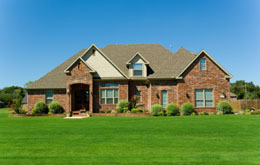
Lawns originated as aristocratic status symbols in 17th-century England—expansive, labor-intensive grasslands demonstrating wealth through wasted land and hired maintenance. This aesthetic migrated to America, where post-WWII suburban development cemented the lawn as the default residential landscape. Today, turfgrass covers an estimated 40-50 million acres in the U.S.—our largest irrigated "crop."
Residential outdoor use accounts for 30-70% of household water consumption, varying by region. In arid climates, maintaining cool-season grasses (Kentucky bluegrass, fescue) requires 40-60 inches of supplemental water annually—far exceeding natural rainfall. This strains municipal supplies, depletes aquifers, and reduces stream flows critical for ecosystems.
The "perfect" lawn typically demands:
Gas-powered mowers, trimmers, and blowers emit significant CO2 and pollutants. One hour of mowing can equal driving a car 100+ miles. Soil carbon sequestration in lawns is minimal compared to diverse plantings.
Monoculture turf supports almost no native insects, birds, or mammals. It fragments habitat and creates ecological dead zones across suburban landscapes.
The lawn paradigm works reasonably well in the humid Southeast and Pacific Northwest where rainfall matches grass needs. But in the Southwest, Intermountain West, and Great Plains—where evaporation exceeds precipitation—maintaining turf is fundamentally misaligned with local ecology.
Xeriscaping isn't "zeroscaping" (gravel and cactus). It's a systematic approach:
Municipalities increasingly offer turf removal rebates. HOAs are updating covenants. Native plant nurseries are booming. The "perfect lawn" is being replaced by a more nuanced ideal: beautiful, functional landscapes that belong to their place. Your yard can be part of this transition—one plant, one bed, one season at a time.
Brown Water from Faucets During Sprinkler Run: Source Investigation
Lawn Watering Schedule: How Much to Revive Dead Grass
Rose Buds Shriveling Before Opening: Water on Buds + Cool Nights = Botrytis
Saving a Dying Laurel Hedge Planted Near a Yew Tree
Water Gardening: From Simple Containers to Backyard Ecosystems
Water Garden Problem Solving: Planting Deep Ponds, Controlling Reedmace, and Soil Mixes
Fountain with a Past: Ancient Aqueduct-Inspired Water Feature
Puddles on a Slope: Drainage Fixes Before Spring
How to Water a Large Lawn: Deep and Infrequent
Persistent Green Algae in Large Koi Pond: Filter Maturity and Maintenance
Lethargic Koi in 1,500-gal Pond: Water Quality and Parasite Check
Scale on Pond Rocks and Yellow Surface Film: Organic Buildup and Bacterial Clarifiers
Fixing a Floating Liner: Drainage Solutions for Clay‑Bottom Ponds
Green Algae in a Small Frog Pond: Algaecide, Barley Straw, Floaters
Copyright © www.100flowers.win Botanic Garden All Rights Reserved