


The pipal tree (Ficus religiosa), also known as the bodhi tree, bo tree, or sacred fig, holds profound spiritual significance across Asian cultures. Revered in Hinduism, Buddhism, and Jainism, this ancient tree has been worshipped for millennia.
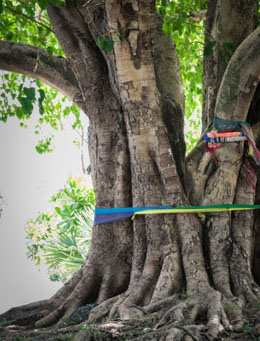
The earliest depiction of the pipal tree appears on a seal from Mohenjo-daro, dating to the Indus Valley Civilization, showing it being worshipped. The Shri Maha Bodhi tree in Bodh Gaya, planted in 288 BCE, is the oldest verified flowering plant. According to Buddhist tradition, Siddhartha Gautama attained enlightenment beneath this tree. Hindus revere it as Asvattha, believing Lord Vishnu was born under it and Lord Krishna died beneath its branches. Vedic sages have long meditated under its canopy.
Native to the Indian subcontinent, Indo-China, and Southwest China, the pipal is a deciduous tree reaching up to 100 feet tall with a trunk diameter of 10 feet. Its heart-shaped leaves have a distinctive extended tip. The tree sheds leaves in March–April and bears small purple figs in pairs below the leaves, ripening in May. The bark is light gray, smooth, and peels in patches.
The pipal tree exemplifies the intersection of spirituality, ecology, and traditional medicine, offering multifaceted benefits to humanity.
Kansas Mimosa with Foam and Yellow Leaves: Mimosa Wilt
Sawdust Threads on Oak Tree: Wood Borers or Caterpillar Frass—Diagnosis Steps
Dealing with Tree Roots in the Lawn: Removal and Prevention
Mystery Fruit Tree: Pear or Wild Seedling?
Growing Quince from Seed: Propagation Tips and Grafting Insights
Fig Tree Pollination: The Wasp Question and Better Alternatives
Sources for Tree Seeds: Reputable Suppliers
Tree Roots Lifting Pavers: Switch to Gravel or Raise Patio
Carrotwood Tree Facts: Addressing Neighbor Concerns
Designing a 2-Acre Windbreak: Species Mix, Staggering, and Spruce Companions
Removing a Fruitless Mulberry Tree and Preventing Regrowth
Identifying Mystery "Palermo Tree" Gift
Overhanging Tree Disputes: Legal Responsibility and Arborist Advice
Copyright © www.100flowers.win Botanic Garden All Rights Reserved