


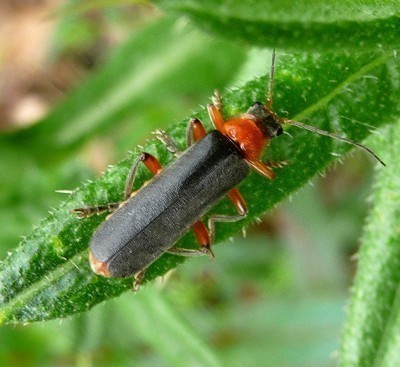
Soldier beetles (family Cantharidae), also called leatherwings, are often mistaken for fireflies (without the glow) or wasps. Their soft, elongated bodies—typically yellowish-tan with a black spot on each wing cover—are a common sight on late-summer flowers. Far from pests, they are dual-role benefactors: larvae eat pest eggs and soft-bodied insects in soil; adults pollinate widely while feeding on nectar and pollen.
Eggs laid in fall hatch into predatory larvae that overwinter in soil and leaf litter. In spring, they emerge as adults and flock to bright flowers—especially goldenrod, zinnias, marigolds, and flowering herbs. They cannot bite or sting humans. Their constant flower-to-flower movement makes them excellent pollinators, rivaling bees in some settings. Late summer, they help suppress aphid outbreaks just as other predators decline.
Plant their favorites: goldenrod (top choice), linden trees, and a succession of open, accessible flowers. Allow herbs (dill, fennel, cilantro) to bloom. Avoid insecticides. Provide undisturbed soil and leaf litter for larval development and overwintering.
Soldier beetles are a sign of a healthy, flower-rich ecosystem—welcome them and enjoy the pollination bonus.
Natural Mosquito Control for Your Summer Garden
What Makes Good Garden Soil? Composition, Structure, and the Nose Test
The Ten Principles of Good Garden & Landscape Design
Beneficial Garden Insects: Nature’s Pest Control Squad
Most Garden Bugs Are Good Bugs: Meet Your Beneficial Insects
The Benefits of Mulching: Healthier Soil, Less Work, Better Looks
Organic Nutrients in Hydroponics: Navigating the Certification Maze
Annual Flowers: Year-Round Garden Color Made Simple
Friend or Foe? Identifying Beneficial vs. Harmful Lawn Weeds
Benefits of Ergonomic Garden Tools: Comfort, Safety & Durability
Snakes in the Garden: Why These Reptiles Are Your Best Allies
Copyright © www.100flowers.win Botanic Garden All Rights Reserved