


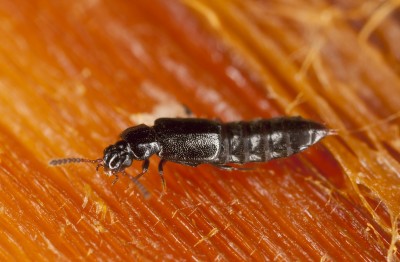
Rove beetles (family Staphylinidae) are among the most numerous yet overlooked beneficial insects in North American gardens. With over 3,000 species on the continent, these slender, fast-moving beetles range from 1/8 to nearly 1 inch long. When disturbed, they often raise their abdomens like a scorpion—a bluff, as they cannot sting or bite humans.
Both adults and larvae are voracious predators. They hunt small insects, mites, and other arthropods on plants, in soil, and around decaying organic matter. Some species specialize: members of the genus Aleochara target root maggots, though they often emerge too late in the season to prevent significant crop damage. Adults seen on carcasses are actually feeding on the maggots and other insects infesting the remains, not the flesh itself.
Life cycles vary by species. Certain larvae enter the pupae or larvae of their prey, feeding internally before emerging as adults weeks later. Adults possess large mandibles for seizing prey. Rove beetles prefer to run rather than fly, patrolling the soil surface and plant bases at night.
Unquestionably good. Rove beetles help suppress pest populations—including aphids, mites, springtails, and various larvae—without harming plants. They require no special management; simply avoid broad-spectrum insecticides and maintain diverse, mulched habitats. When their prey disappears, they naturally disperse.
While not yet commercially available for release in the U.S., conservation of existing populations is easy: leave leaf litter, maintain ground cover, and minimize soil disturbance. These tiny hunters will quietly keep your garden’s pest pressure in check.
Baby Pitchers on Sarracenia purpurea: Rhizome Divisions, Not Energy Drain
Yellow Streaks on New Lawn: Slime Mold or Rust, Not Fungicide Target
Transform Bad Garden Soil into Rich, Fertile Loam
Mistletoe: Parasite, Poison, or Sacred Healer?
Controlling Lily Leaf Beetles: Organic Methods to Protect Your Lilies
Eliminating Cigarette Beetles from Your Pantry: A 5-Step Plan
Organic Japanese Beetle Control: Soap, Pyrethrin, and Realistic Expectations
Chemical Control for Japanese Beetles: When Hand-Picking Isn't Enough
Japanese Beetle Control on Peach Trees: Realistic Options
Japanese Beetle Control: When Hand-Picking Isn't Enough
Tree Climbing Spikes Damage Trees: Why Rope Climbing Is Preferred
Pine Bark Beetle Identification: Species, Attack Patterns, and Prevention
Copyright © www.100flowers.win Botanic Garden All Rights Reserved