


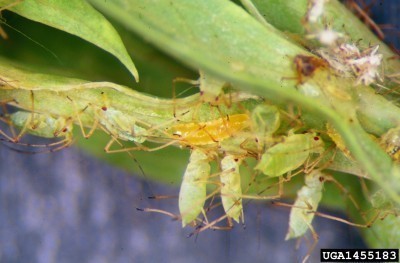
Aphid midges (Aphidoletes aphidimyza) are delicate, mosquito-like flies whose bright orange larvae are aphid-killing machines. Each larva can consume up to 65 aphids per day, and they target over 60 aphid species—often outperforming ladybugs and lacewings in dense infestations.
Adults (under 1/8 inch) hide under leaves by day and feed on aphid honeydew at night. Females lay 100–250 shiny orange eggs among aphid colonies. Larvae hatch in 2–3 days, inject paralyzing toxin into aphids’ leg joints, then suck out their contents. After 3–7 days of feeding, larvae drop to the soil, pupate just below the surface, and emerge as adults in ~10 days. Multiple generations occur per season.
They often arrive naturally when aphids appear. If not, purchase pupae from biological supply companies. Scatter pupae on moist, shaded soil near infestations. Release 2–4 batches over the season for severe outbreaks. Avoid insecticides; provide flowering plants for adult nectar. A single early release can establish a self-sustaining population.
Aphid midges are a cornerstone of integrated pest management for greenhouses and gardens—tiny, specialized, and remarkably effective.
Controlling Pecan Weevils in Home Orchards
Controlling Thrips on African Violets: Chemical and Organic Options
Selective Weed Control in Vinca Groundcover
Birds: Nature's Pest Control for Your Garden
Choosing a Pest Control Company: Essential Questions for Raleigh Homeowners
Smart Herbicide Use: Seasonal Weed Control Without Lawn Damage
Natural Pest Control: Using Herbs & Flowers to Protect Your Vegetable Garden
Natural Home Pest Control: Permanent Solutions for a Pest-Free Home
Natural Pest Control: Organic Methods That Actually Work
Green Pest Control Methods for a Healthier Home
First-Time Homeowner's Guide to Smart Pest Control Decisions
Why Professional Pest Control Benefits Your Home AND the Environment
Organic Pest Control for Greenhouse Gardeners: Companion Planting, Sprays & Scouting
Copyright © www.100flowers.win Botanic Garden All Rights Reserved