



I've gardened and written about it for 20+ years, always learning. Gardening is never boring! Landscaper, organic farm, plant pathology lab, cut-flower business—all inform my writing. My Victorian B&B renovation means garden beds are a process, not a goal.
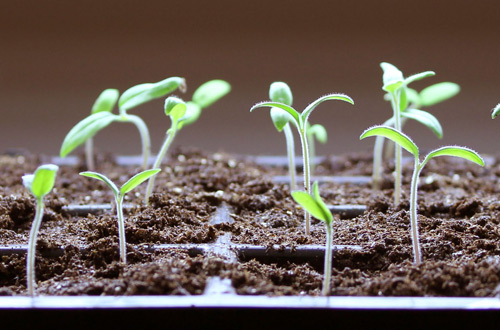
A seed-starting kit like GrowEase makes vigorous, healthy seedlings easy.
Many experienced outdoor gardeners hesitate to start seeds indoors. But it's one of the most rewarding parts—hands in soil during dark winter days, watching lifeless seeds sprout and grow. Here are answers to hundreds of seed-starting questions.
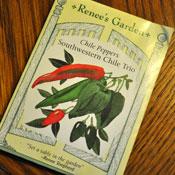
Three pepper varieties for the price of one!
Reasons: access to hundreds of varieties (vs. dozen at garden centers), save money (packet costs dollars, contains dozen+ seeds vs. single plant cost), beat winter blues, rewarding to grow from seed to harvest.
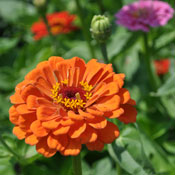
Zinnias are among easiest flowers from seed.
Begin with: tomato, pepper, basil, zinnia, marigold, cosmos. Germinate readily, grow fast. Then try challenging plants.
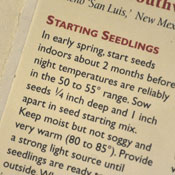
Most packets include sowing instructions.
Timing is everything. Goal: ideal transplant size at proper garden time. Depends on: last frost date, cool/warm preference, germination/growth speed. Packets say "sow indoors 6 weeks before last frost." Determine your average last frost, mark calendar, count back weekly.
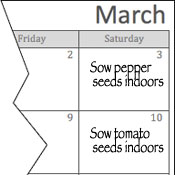
Create planting calendar by counting back from last frost.
Ask experienced neighbor, local Master Gardener (Cooperative Extension), or garden center staff. Actual last frost varies yearly; average is approximation but good starting point.
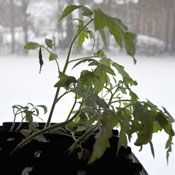
Sad seedlings reaching for light on windowsill.
Possible on sunny windowsill, but grow lights give much better results. Early spring sun isn't intense, days are short. Windowsill seedlings become long, weak, bending toward light. Under consistent fluorescent lights: strong, stocky stems that transplant better.
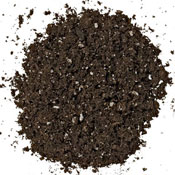
Seed-starting mixes are well-drained and disease-free.
Garden soil drains poorly in small trays and harbors disease organisms. Use lightweight seed-starting mix (e.g., Germinating Mix): drains freely, retains moisture for roots, free of fungi and pathogens.
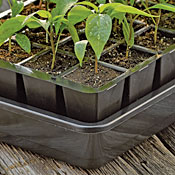
Seed-starting systems designed for healthy growth.
Any container with drainage works, but specialized pots/trays provide optimal conditions: start many seeds in small space, drain freely to prevent rot. Biodegradable (Cowpots) or reusable trays. Self-watering all-in-one systems are convenient and foolproof.
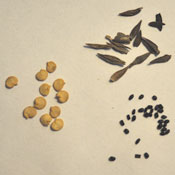
Basil, pepper, zinnia seeds: different sizes, different depths.
Packets usually specify. Rule: sow 2-3x seed width deep. Don't plant too deep—seed has limited food; too deep = runs out before reaching light. Some need light to germinate—sow on surface.
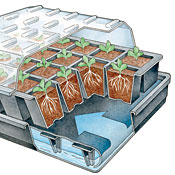
Self-watering starters take guesswork out.
Bottom watering preferable: keeps surface drier, prevents disease. For small/surface seeds, top misting keeps surface moist. Self-watering systems (GrowEase) use wicking fabric for steady, perfect moisture—fill reservoir, no over/under-watering.
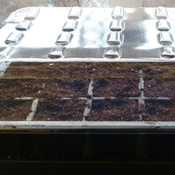
Remove cover at first sprout.
Cover holds moisture for germination. Remove at first tiny sprout for air circulation, minimizing disease.
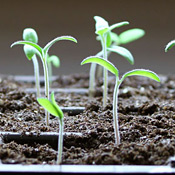
Keep lights 4-6 inches above seedlings.
Few inches from tops promotes strong, stocky growth. Adjustable lights raise as seedlings grow.
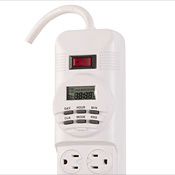
Timer makes proper light easy.
14-16 hours daily best. Need darkness period to rest and prepare for active growth. Automatic timer makes it easy.
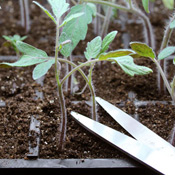
Thin to one per cell.
Few weeks after germination, crowding occurs. Choose strongest, snip others at soil line. Separating damages roots, sets back growth. Hardest part for most gardeners.
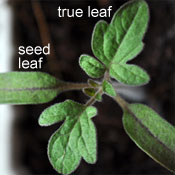
"True leaves" resemble mature plant leaves.
First set = cotyledons (food storage). Second set = true leaves. Begin fertilizing at 1-2 inches tall or second true leaf set.
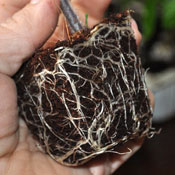
Time to transplant before roots crowd.
~1 month after sowing or 4" tall: gently remove one. If roots filling space, transplant to larger pot. Don't wait—crowding stunts growth, complicates recovery.
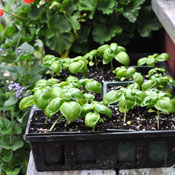
Acclimate seedlings before garden planting.
Hardening off = acclimating to outdoor conditions. Indoors: coddled with perfect light, moisture, nutrients. Outdoors: fluctuating temps, light, moisture, wind. Week before transplant: protected spot outdoors (part shade, no wind) few hours, bring in at night. Gradually increase sun/wind over 7-10 days. Cold frame ideal.
Even experienced starters have problems. Symptoms and causes:
Collecting Coleus Seeds: Hybrid Warning
The Svalbard Global Seed Vault: Why 3 Million Seeds Matter
Universal Seed-Starting Guide: Cannas, Daylilies, and Sago Palms
Planting Sesame Seeds: Grocery Store vs. Viable Seed
Sansevieria (Snake Plant) Seed vs. Leaf Cutting Propagation
Stratifying Japanese Maple Seeds: Fridge Method for Germination
Saving Vegetable Seeds: Tomatoes, Peppers, Cucumbers, and More
Collecting and Germinating Lilac Seeds
Seed Catalogs: The Winter Gardener's Antidote to Cabin Fever
Seed Selection and Planting: Choosing Viable Seeds for Strong Plants
Easy Seeds for Beginners: Top Picks for First-Time Seed Starters
How to Start Seeds: Complete Guide from Seed to Garden
Copyright © www.100flowers.win Botanic Garden All Rights Reserved