


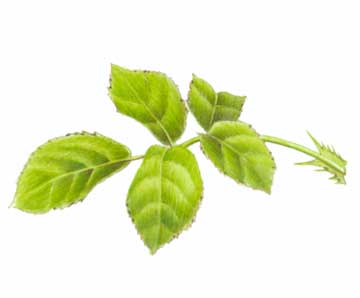
If symptoms appear primarily on mature leaf sets—those on stems already bearing blooms—consult the following guide to identify which nutrient your rose lacks.
Click here to learn how to water your roses.
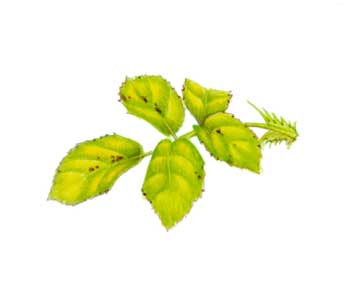
Leaves turn a lighter green to yellow, often with random leaf spots. If soil pH is too acidic (5.8 or lower), apply lime (¼ to ½ cup per bush). If pH is adequate, fertilize with a high-nitrogen fertilizer (1 to 2 tablespoons per bush).
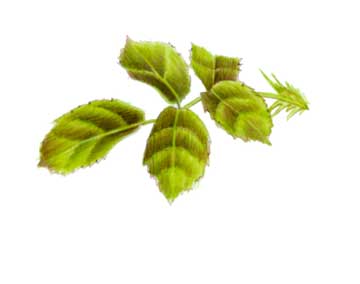
Leaves become dark green, developing dark red and purple colors, mainly within the leaf (colors can also spread to outer edges). If soil is too acidic, apply lime. If pH is okay, fertilize with a high-phosphorus fertilizer (20%), 1 to 2 tablespoons per bush.
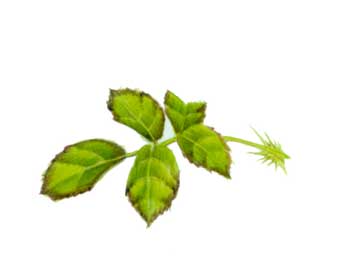
Dead tissue appears mainly at leaf edges. If soil is too acidic, apply lime. If soil pH is okay, feed with 2 tablespoons per gallon of potassium nitrate.
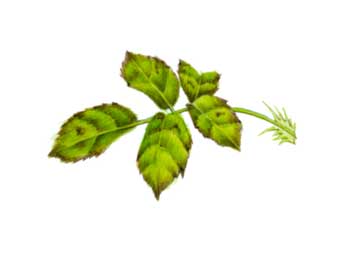
Large areas of dead tissue at leaf tips and between veins. Apply lime to correct pH. If pH is okay, apply zinc chelate (1 teaspoon per bush).
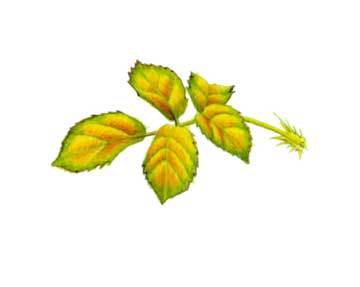
Yellowing starts from the center of the leaf, with signs of dying tissue overlaying affected parts. Apply Epsom salts, ½ cup sprinkled around the base of each bush.
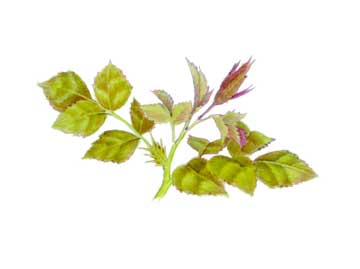
If symptoms are localized to emerging foliage, use this guide to determine the cause and treatment. Shown at right is an example of healthy emerging foliage, with normally purplish leaves on stems that do not yet have mature blooms.
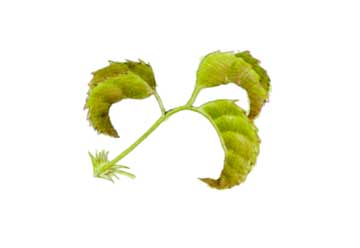
Young leaves are hooked. Apply calcium nitrate (1 to 2 tablespoons per bush per week) until corrected.
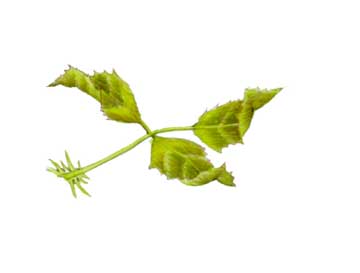
Young leaves are light green at the base and twisted. Apply 1 teaspoon Borax per bush.
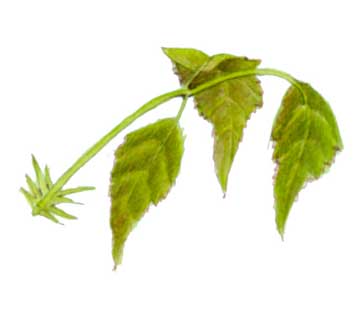
Young leaves are permanently wilted with no chlorosis (yellowing). Apply copper sulfate (¼ teaspoon per bush).
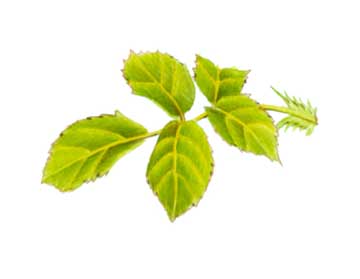
Leaves are light green with lighter-green veins. Apply soil sulfur (2 tablespoons per bush) or a fertilizer containing sulfur.
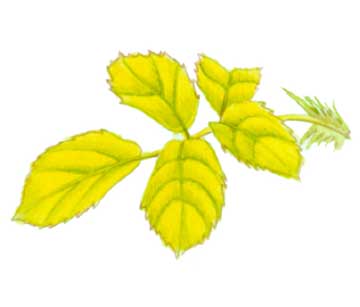
Leaves turn yellow with principal veins remaining light green. Use iron chelate (¼ teaspoon per bush) for immediate correction; iron sulfate takes longer to act.
Knock Out Rose Buds Drying Up: Rose Midge Infestation
Rose of Sharon Bark Splitting: Research Needed
Blue Rose Meaning: The Impossible Flower's Symbolism in Love, Mystery & Myth
Rose Flower Facts: Anatomy, History, and Surprising Science
Diagnosing and Treating Common Rose Nutrient Deficiencies
Huntington Rose: Deep Pink Old-Fashioned Blossoms, Delicious Soft Old Rose Fragrance
White Rose Meaning: Purity, Reverence, and the Language of Silence
Rose Care Q&A: Expert Answers to Common Growing Questions
Doris Day 24" Tree Rose: A Floribunda Tribute to America's Sweetheart
Doris Day 36" Tree Rose: Gold-Yellow Floribunda Tribute on Tall Standard
Ambridge Rose: Compact Apricot-Pink Blooms, Rich Myrrh Fragrance
Copyright © www.100flowers.win Botanic Garden All Rights Reserved