


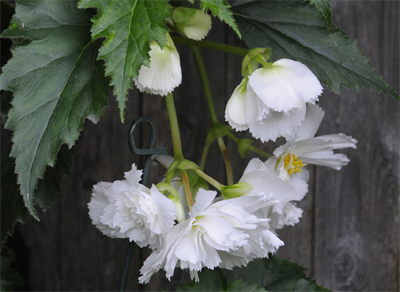
This upright begonia lights up shade with large blooms. Staking keeps these fragile beauties upright.
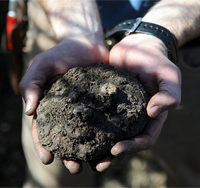
The begonia tuber that produced the flowers above.
Of over 1,000 begonia species, tuberous begonias are the most stunning, with showy flowers up to 8 inches across blooming from summer to fall. Their standout trait? They thrive in shade. Breeders have developed classes distinguished by flower form—colors range from pure white to deepest crimson, including picotee types with contrasting petal edges. Choose based on personal taste.
Cascading varieties like the Illumination series shine in hanging baskets on decks or suspended from tree branches. Upright forms like the Nonstop series grow about a foot tall, perfect for planters or edging walkways.
Tuberous begonias originate from high-altitude Andes conditions—high humidity, cool nights. They perform best in similar settings and struggle in hot, arid climates without special care. They need shade from intense sun but require some light to flower well; morning light or dappled shade through leaves or lattice is ideal.
Start tubers indoors at least a month before the last frost—it can take three months to reach full bloom. Place tubers 1 inch apart, hollow side up, in shallow pots of moistened potting soil at 70°F. Cover with 1 inch of soil. Water thoroughly once to stimulate growth, then keep soil from drying out completely; humidity is key.
When sprouts reach 1–2 inches, repot into 6-inch pots or final containers. Use a light, moisture-retentive mix and cover tubers with no more than 2 inches of soil. For fewer, larger flowers, pinch off all but a few young stems. For bushier plants, let all buds develop.
After frost danger passes, move containers to a partly shaded, wind-sheltered spot. In beds, space plants 8–12 inches apart in early-morning or late-afternoon sun. Fertilize regularly. Keep containers moist but avoid overwatering, which rots stems. Keep foliage dry—overhead watering invites powdery mildew; use soaker hoses, drip irrigation, or self-watering containers.
Deadhead regularly to reduce disease risk. For an exotic touch, snip a flower and float it in a bowl of water indoors.
Tuberous begonias are cold-sensitive, surviving outdoors only in frost-free zones 9–10. In most areas, before fall frost, lift tubers from containers or beds and dry them in an airy, shady indoor spot. Once tops dry, remove them and store tubers in dry peat moss in a cool (35–45°F), dark place. In late spring, restart the cycle indoors about a month before the last frost. For more on overwintering, read the blog post Begonias to Share.
Utricularia gibba Basics: Easy Aquatic Bladderwort for Beginners
Vinegar as Fungicide for Sarracenia: Experimental and Risky
Growing Roses Successfully: Complete Guide for Beautiful Blooms
Growing Export-Quality Flowers in Israel's Challenging Climate
Growing Dahlias: A Complete Guide from Planting to Winter Storage
Nepenthes tobaica and N. villosa: Growing Conditions and Growth Rates
Begonia Flower Color Is Genetic – Cannot Be Enhanced
Complete Guide to Begonias for Containers: Types, Care & Companions
Angel Wing Begonias: Varieties and Sun Tolerance
Harvesting Loose-Leaf Lettuce: Cut-and-Come-Again Method
Copyright © www.100flowers.win Botanic Garden All Rights Reserved