


If poorly drained soil has thwarted your vegetable and flower dreams, don't give up. While choices are limited by "wet feet," many strategies improve drainage — or transform the curse into a blessing: a lush, verdant oasis. Whether building raised beds and decks or embracing the moisture with rain gardens draped in ferns and mosses, fall is ideal for a saturated-site makeover. Here are 10 approaches.

As children, water and dirt held endless possibilities — mud puddles, ditches, gurgling brooks. Moving water still captivates. For those with "too much water," channel it into man-made streambeds of rocks, gravel, moss, and plants that leave surrounding areas high and dry.
The difference between a ditch and a rain garden is foresight and artistry. A ditch (swale) is a trench collecting excess water, ushering it from the house — often choked with weeds, mud, or eroded soil.

Turn an ugly ditch into a rain garden by replacing grass and weeds with moisture-tolerant plants, rocks, and gravel for a naturalistic streambed. Gravel and stones inhibit weeds. First step: decide where water ends — downhill is obvious. Avoid directing onto neighbors' property (fines, bad blood). Direct flow to a low-lying collection area; plant with perennials and shrubs tolerating standing water. Follow land contours, vary streambed width, plant larger accents at curves.

Even without a rain garden, the easiest option is plants that thrive in your conditions. Harder to find than drought-tolerant plants, but many exist. Replace drowning lawn with moisture-loving ground covers: 'Evergold' sedge (Carex oshimensis 'Evergold', zones 5–11), sweet grass (Acorus gramineus, zones 6–9), spiderwort (Tradescantia virginiana, zones 5–10), spikemoss (Selaginella spp.). Shrubs for height: Florida anise (Illicium floridanum, zones 7–10), Southern wax myrtle (Myrica cerifera, zones 7–10), hollies (Ilex spp.). See my ideabook on native trees for flooding.

If a rain garden doesn't suit your lifestyle or layout, a French drain — a perforated tube collecting and distributing water away from buildings or poorly drained areas — may work. Buried in decorative rock/gravel in hardscaping, or topped with turf/ground covers in landscapes for invisible drainage. Downside: French drains send water off-property into watersheds, while rain gardens slow and absorb water with pollutants. Combine both: French drain opens to rain garden for absorption, or sits at rain garden's end to prevent flooding. Consult a landscape architect for the best system.

For vegetables or plants needing well-drained soil, containers with potting mix provide drainage. Any container with ample drainage holes works; ceramic, terra-cotta, stoneware urns are beautiful and last generations if protected from hard freezes. Fast-draining hypertufa pots (Portland cement, sphagnum, perlite cast in molds) or wooden planter boxes from hardware-store lumber work well.

For a cohesive look beyond potted plants, build one big container lifting your garden out of muck — a raised bed. Usually rectangular lumber frames, but can be fancy if solidly built. Even without raised beds, amend soil with organic matter (compost) to build it up.

Fountains and waterfalls are costly and labor-intensive. Instead, utilize downspouts as natural water features following nature's rhythms without utility costs. PVC pipe collects gutter water; choose an attractive facade (bamboo lends Asian look with rocks; a single plant implies water between rains).

Replace downspouts with rain chains — series of links or cups channeling rain attractively. Artistic whimsy aside, they slow roof runoff, reducing erosion and increasing soil absorption before drainage.

If a soggy site gets foot traffic, first drain water from the foundation, then build a deck to enjoy the lush garden without muddy shoes. Wood planks replace puddly paths with boardwalks and bridges — practical and elevating. Install lighting and guardrails (where deck ≥30 inches high) for safety.
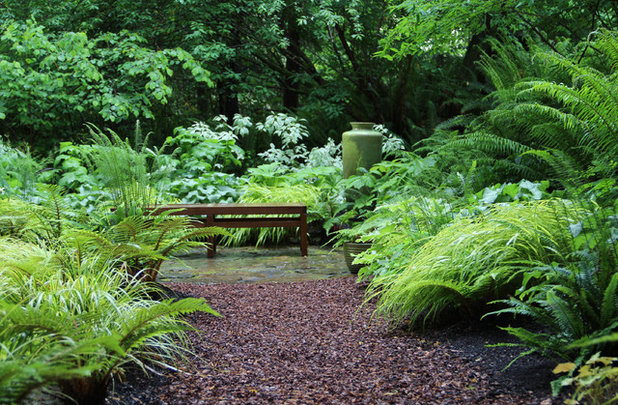
Decks aren't for everyone; costs add up. Gravel, pavers, and stone solve puddles attractively. Large pavers/flagstones with gravel-filled gaps slow pace, give water permeation space. Permeable bricks/pavers suit driveways and patios — solid footing with drainage.

Make friends with moss: soft, treadable, easy to establish where turf fails (too shady/wet). Most wet sites have moss colonies under weeds — remove weeds, divide and pin moss, water until established. Notoriously slow, but get a head start from Moss Acres or Moss and Stone Gardens. The profound beauty it brings is worth it.
Why Raised Beds Filled Only with Manure Fail
Step-by-Step Fall Garden Soil Preparation for Unimproved Ground
Selecting the Perfect Garden Fountain: Design, Materials, and Power
Why Earthworms Are Your Garden’s Best Friends
Designing a Wildlife Pond Planting Plan: Seasonal Interest and Ecological Value
Water-Wise Gardening: Soil, Mulch, and Efficient Irrigation Techniques
Optimal Soil Mix and Watering for Mexican Butterworts (Pinguicula)
Fixing Waterlogged Garden Sections: Drainage Solutions
Container Tomato Soil Debate: Potting Mix vs. Garden Soil & Drainage Myths
Used Garden Soil in Containers? Here's What to Do
Choosing the Right Soil for Water Lilies (Without Clouding Your Pond)
Preparing Perfect Soil for Roses: A Step-by-Step Guide to Deep, Fertile Beds
Create an Edible Water Garden: Grow Delicious Aquatic Plants
Copyright © www.100flowers.win Botanic Garden All Rights Reserved