During the late-autumn days in the northern U.S. and southern Canada, when the sun is low on the horizon during the day, what better to see on a sunny afternoon than a golden tamarack backlit by these low rays? It’s the last hurrah for the deciduous conifer, as it soon will be shedding its golden needles to carpet the ground below.
If you have the pleasure to travel to any boreal plant community in late fall, it’s hard to miss the clusters of tamarack in their fall splendor. This large tree has multiple uses in the planted landscape year-round; it can be used to great effect in large swales where water collects, along wetlands or lakeshores, or in a sunny, low-lying site in a landscape in full sun.
Holm Design & Consulting LLC
Botanical name: Larix laricinaCommon names: Tamarack, American larch, hackmatack, Alaska larch
Origin: Native to north-central and northeastern North America, from Minnesota, Wisconsin and Illinois eastward to Maine in the north and western Maryland in the south; in Canada, it’s native to all provinces and territories
Where it will grow: Hardy to minus 45 degrees Fahrenheit, or minus 43 degrees Celsius (USDA zones 2b to 5b; find your zone)
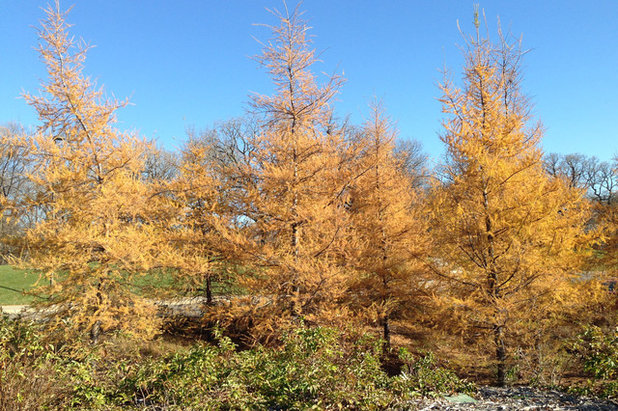
Shown: A cluster of trees planted in a large parking lot swale; rainwater is diverted into the swale from the surrounding impervious parking lot.
Learn more about swales
Holm Design & Consulting LLC
Typical plant communities: Moist, acidic sphagnum bogs; lakeshore edges in peaty soil; occasionally in upland sites
Soil requirement: Acidic, peat-rich moist soil
Light requirement: Full sun
Mature size: 80 feet tall
Benefits and tolerances: Tolerates wet sites and acidic soil
Seasonal interest: Soft, light green needles emerge in late April or May; golden needle color in October; persistent seed cones are clustered along the branches
When to plant: Spring or fall (potted plants are available from most native-plant nurseries in regions where this tree grows)
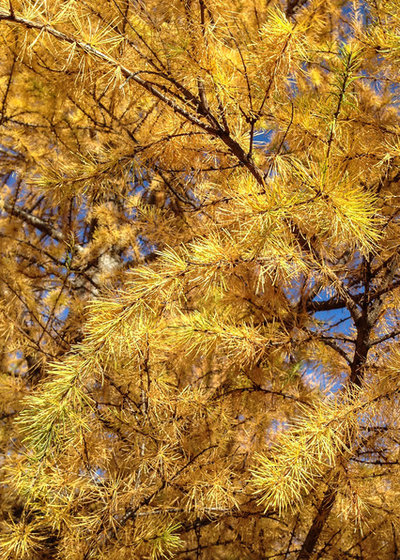
Shown: Close-up of the late-fall foliage color
Holm Design & Consulting LLC
Distinguishing traits. Tamarack is a deciduous conifer that sheds its needles yearly in late fall. The needles turn from a dark green to bright yellow in the fall before falling to the ground by mid-November. The needles are soft-textured (and soft to the touch), and grow in dense clusters from spurs along the branches.
How to use it. Plant it in full sun in any wet to moist location, including along a shoreline, at the edge of a wetland in peaty soil, or in a water retention basin or large rain garden.
Because this conifer is deciduous, it is not the best candidate for screening if you need to block views during winter.
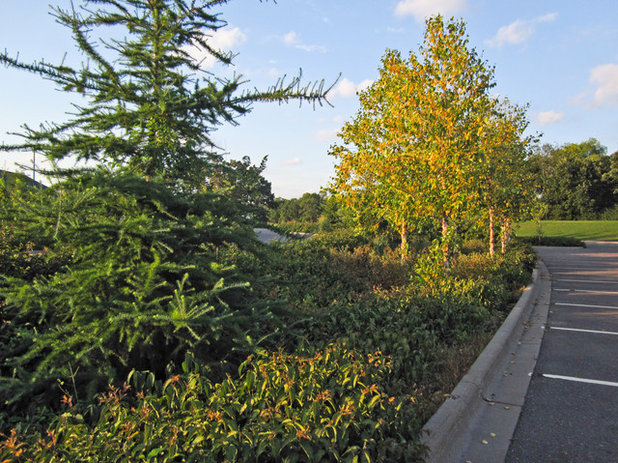
Shown: A tamarack (foreground) growing in a parking lot in midsummer
Holm Design & Consulting LLC
Planting notes. Although this is a pioneering tree in bog habitats, it does occasionally naturally occur in upland sites, away from water, that dry out periodically. It is not uncommon to see a large specimen in an upland, relatively dry site in a suburban planting. It is intolerant of competition for light, so it must be sited in a full-sun location with adequate spacing.
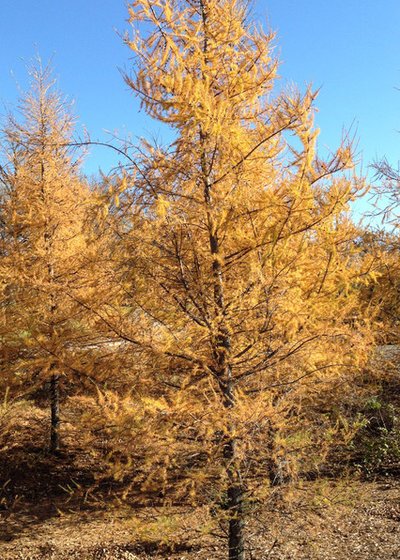
Shown: A single tree about 12 to 15 years old
Holm Design & Consulting LLC
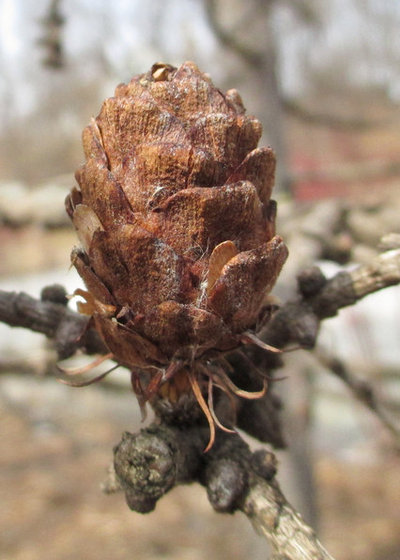
Shown: A seed cone in winter after the seeds have been shed.