


Few succulents match the ornamental flair of Aeonium. With foliage spanning vivid chartreuse to near-black — solid, banded, or striped — and forms ranging from ground-hugging mats to 4-foot-tall architectural stems, this genus of 35 species (expanded into thousands of hybrids) is a collector's dream. Native to the Canary Islands, aeoniums prefer Mediterranean climates: mild, wet winters and dry summers. They're more tolerant of moisture and varied soils than desert succulents, but they are frost-tender.

Debora Carl Landscape Design
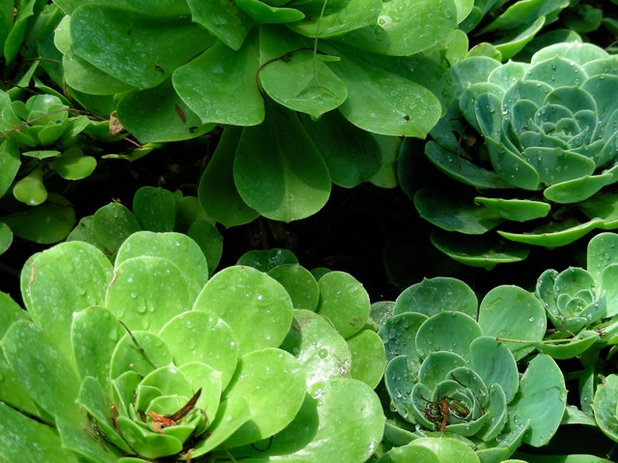
Lush, fleshy leaves form tight rosettes with often rounded edges. Once grouped with Sempervivum, aeoniums were separated due to frost sensitivity and subtle structural differences. Species vary dramatically: A. canariense forms low, offsetting mats; A. arboreum 'Zwartkop' (or 'Schwartzkopf') grows 3–4 feet tall on bare stems, prized for its near-black foliage that deepens in sun but may green in winter. Leggy plants can be rejuvenated by cutting the primary rosette, callusing, and replanting — the stem will also resprout.
Billy Goodnick Garden Design

EPT DESIGN
Aeoniums' rosettes and colors create striking textural contrasts with ornamental grasses, New Zealand flax (Phormium), and strappy-leaved perennials. They pair naturally with other succulents — echeverias, sedums, agaves — in rock gardens, containers, and Mediterranean beds. In frost-prone areas, grow them in pots that can be moved indoors for winter. Northwest designer Steve Atkins notes: "Even our moderate winters can easily decimate them."

Carl Balton + Associates

Carson Douglas Landscape Architecture
With their painterly colors and sculptural forms, aeoniums elevate succulent design from merely drought-tolerant to genuinely artistic.

Root Design & Landscape

Randy Thueme Design Inc.

Debora Carl Landscape Design
Paddle Plant (Kalanchoe luciae): A Striking Succulent for Gardens and Containers
Veronica (Speedwell): Versatile Perennials for Sun, Shade, and Everything Between
Blue Fescue: The Versatile Grass for Every Garden Style
Pride of Madeira: A Dramatic Mediterranean Showstopper
Fan Aloe: A Sculptural Succulent for Dramatic Garden Structure
Peonies: The Old-Fashioned Perennials That Bloom for Generations
Dahlias: The Garden Divas That Master Every Disguise
True Lilies: A Guide to Lilium Species and Hybrids
Winter Daphne: A Fragrant Evergreen Shrub for Shady Gardens
Saucer Magnolia: A Spring Spectacle Worth the Wait
Great Design Plant: Coyote Bush — A Resilient Native for Wildlife Gardens
Great Design Plant: Golden Currant — A Multi-Season Native Shrub
Copyright © www.100flowers.win Botanic Garden All Rights Reserved